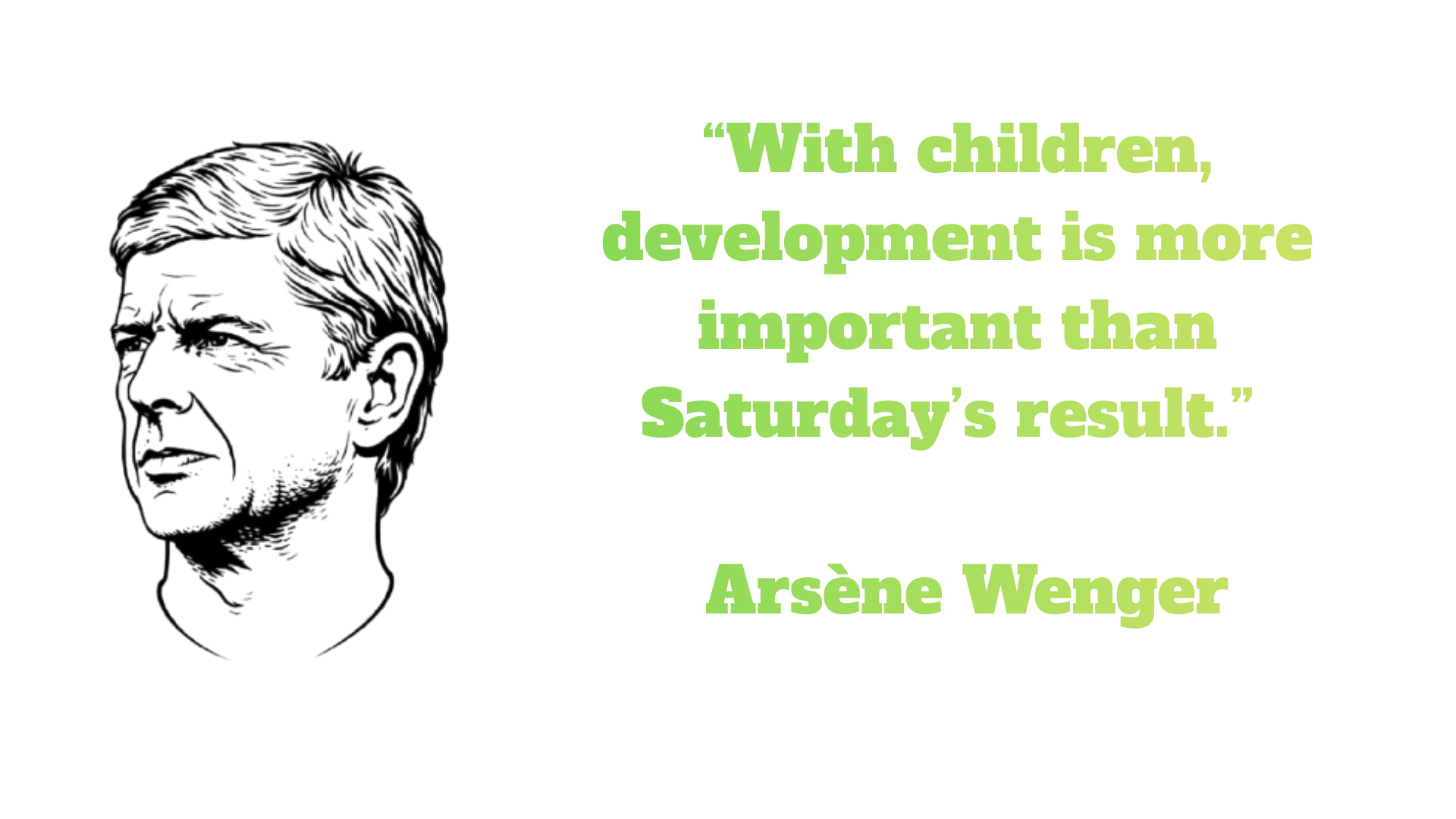
In youth football, a dangerous confusion often appears: measuring a child’s progress through the final score of the match. Arsène Wenger captures one of the healthiest development philosophies in a single sentence: immediate results should never be the priority when working with children.
A good result on a Saturday does not guarantee long-term development. Children can win matches through simple solutions, fear of making mistakes, or strict obedience to instructions—without truly understanding the game. Real development, however, requires time, mistakes, experimentation, and exposure to situations that challenge thinking.
When the focus shifts excessively toward results, the child starts playing to avoid mistakes rather than to learn. Initiative is reduced, creativity disappears, and decisions are made out of fear instead of understanding. In the short term, a win may appear, but in the long term, progress is lost.
Development means helping the child understand the game: where they are, why they choose a solution, and what alternatives exist. It means creating contexts where the child is encouraged to think, not just execute. This process is not always compatible with the desire to win every match.
A coach who prioritizes development accepts that losses will sometimes happen. But they also know that their players will gain something far more valuable: game intelligence, confidence, autonomy, and a genuine love for football.
Arsène Wenger’s message is clear: with children, we are not building league tables—we are building players and people. Results will come later, as a natural consequence of a process done the right way.
In youth football, the real victory is not shown on the scoreboard, but in how the child grows from one week to the next.