
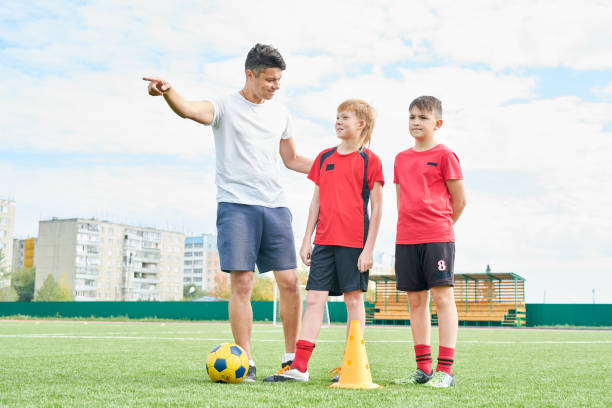
Identifying sporting potential early in school can change a student’s trajectory — not only in sports, but in life. The physical education teacher plays an essential role in this process: from observing physical abilities to cultivating talent and character.
What does “sporting potential” mean?
Sporting potential does not mean only speed or strength. It is a combination of factors:
-
Physical qualities (speed, endurance, coordination, flexibility)
-
Motor and technical skills
-
Game intelligence and adaptability
-
Attitude, discipline, and desire for progress
A student can have tremendous potential even if they do not stand out immediately through performance.
How do you identify sporting potential in class?
1. Careful and continuous observation
Note behaviours such as:
-
willingness to participate actively;
-
quickness in learning movements;
-
perseverance, even when facing difficulties.
2. Diversifying the exercises
Offer varied games and drills to highlight multiple types of motor intelligence: running, team games, balance, hand–eye coordination, etc.
3. Simple motor tests
Without creating pressure, you may use tests such as:
-
sprinting (20–30 m)
-
standing long jump
-
throwing a medicine ball
-
balance or endurance tasks
4. Dialogue with the student
Sometimes inner motivation is more important than initial results. A motivated student who wants to learn and work can surpass, over time, a classmate with natural talent.
How do you develop sporting potential?
1. Encouragement and recognition
Every improvement deserves to be acknowledged. Positive and personalized feedback builds the student’s confidence.
2. Offer opportunities for expression
Organize matches, school competitions or even “special roles” during class — team captain, referee, timekeeper, etc.
3. Recommend extracurricular activities
A student with potential should be encouraged to join:
-
local sports clubs;
-
sports schools or excellence centres;
-
sports camps and training programs.
4. Collaboration with the family
Communication with parents is essential. Their emotional and logistical support can make a significant difference.
Don’t forget: character matters
A talented athlete without discipline or respect will not go far. That’s why character development must go hand in hand with physical preparation.
Conclusion
Every child has potential waiting to be discovered. The PE teacher has both the privilege and the responsibility to guide this process. With patience, empathy, and professionalism, you can be the spark that lights the path of a future champion — in sports or in life.