
In youth football, mistakes are often treated as problems to eliminate. But in reality, they are essential signals of learning in progress. A child who never makes mistakes is usually a child who never takes responsibility, never explores solutions, and never truly understands the game.
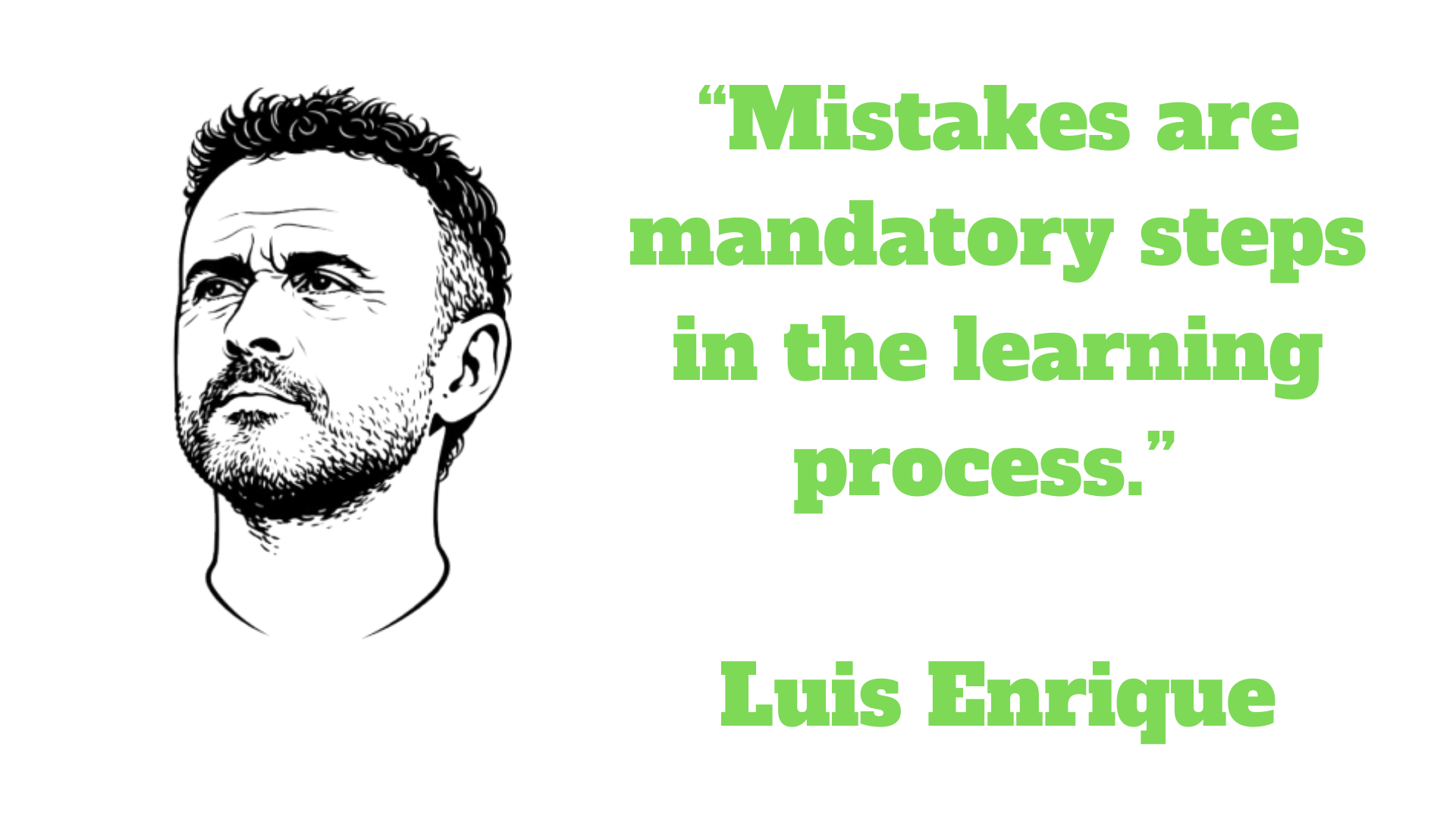
Luis Enrique’s quote reminds us of a fundamental truth: development does not happen on a straight line. It happens through trial, error, reflection, and repetition.
When a young player makes a mistake, several key processes are activated. First, the child becomes aware of a decision. Then comes adaptation: What could I do differently next time? This internal dialogue is the foundation of game intelligence. Without mistakes, this process simply does not exist.
Mistakes also build emotional resilience. A player who is allowed to fail learns to cope with frustration, to reset mentally, and to stay engaged. These qualities are just as important as technical ability, especially in competitive environments later on.
Another critical aspect is creativity. Creative players are not those who always choose the safest option, but those who dare to try something new. Dribbles, risky passes, unexpected movements—all of them come with a risk of failure. If mistakes are punished, creativity disappears.
Mistakes also improve decision-making speed. Each error becomes a reference point stored in the player’s memory. Over time, this builds a faster and more accurate understanding of situations on the pitch.
Finally, accepting mistakes strengthens the coach–player relationship. When children feel safe to fail, they trust the environment. And trust is the condition that allows learning to accelerate.
Youth football should not be about eliminating errors. It should be about guiding players through them, helping them understand why they happened and how to respond next time. Because every mistake, when handled correctly, is a step forward—not backward.