
In youth football, adults often slow children down without realizing it.
Too many rules. Too much control. Too much fear of mistakes.
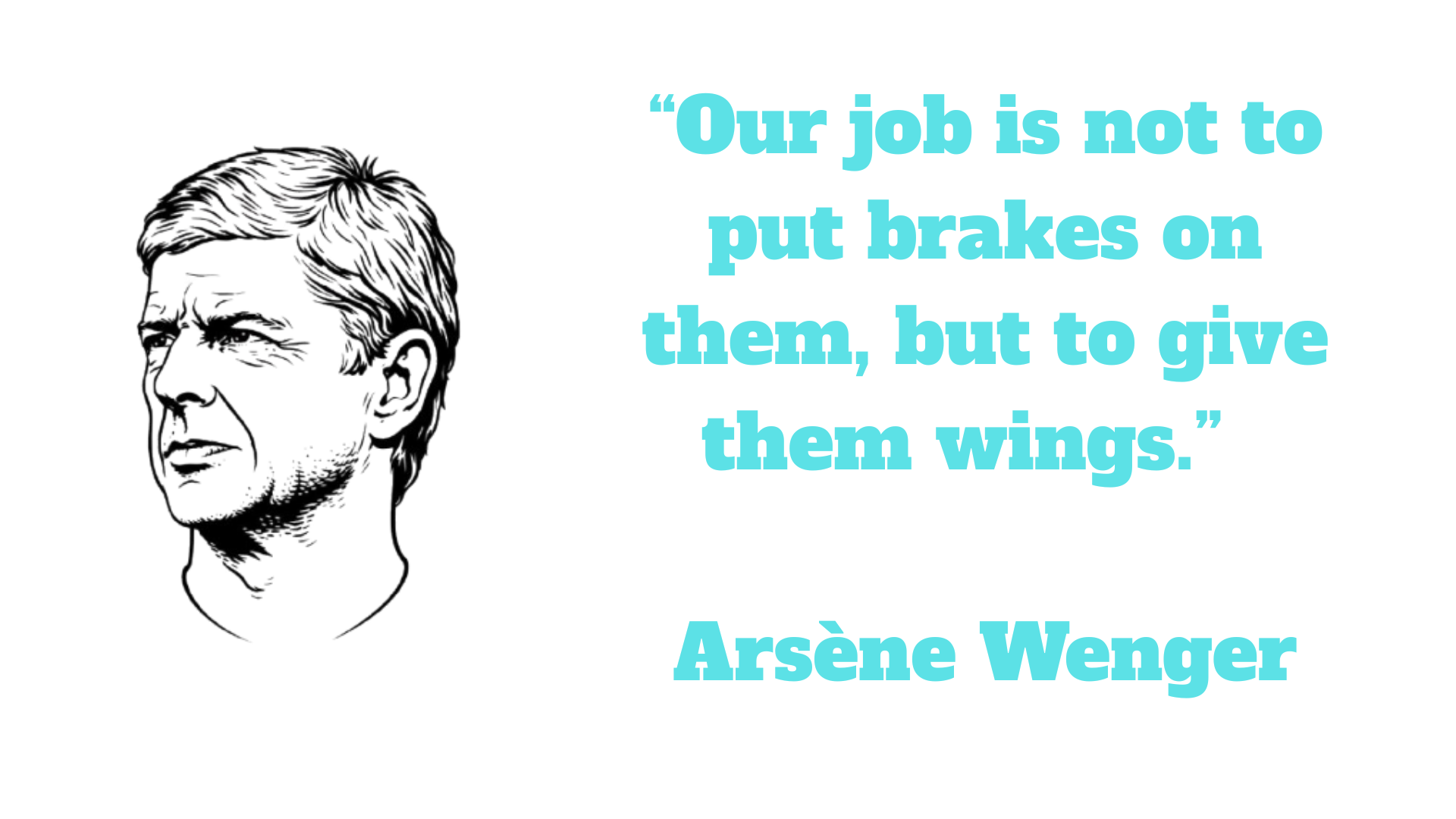
Arsène Wenger captures the true role of a youth coach in one powerful sentence:
our job is not to put brakes on children, but to give them wings.
Development does not come from restriction.
It comes from trust.
How coaches unintentionally put brakes on children
Brakes appear when:
-
every action is corrected immediately;
-
mistakes are punished instead of explored;
-
creativity is replaced by obedience;
-
players are afraid to try something new.
In these environments, children don’t stop playing because they lack talent —
they stop because they no longer feel free.
Football becomes slower, safer, and poorer.
What it means to “give them wings”
Giving wings does not mean letting everything happen without structure.
It means creating conditions where children can:
-
express themselves;
-
take responsibility;
-
explore solutions;
-
grow with confidence.
A child with wings:
-
plays with courage;
-
learns faster;
-
adapts naturally;
-
enjoys the game deeply.
Freedom accelerates learning.
Wenger’s philosophy: trust before control
Throughout his career, Arsène Wenger defended intelligent, expressive football.
His belief was clear: players grow when they are trusted.
At youth level, this philosophy translates into:
-
fewer instructions, more questions;
-
game-based learning instead of rigid drills;
-
patience instead of pressure;
-
long-term development over short-term results.
You don’t teach children to fly by holding them down.
The coach’s real responsibility
A youth coach is not there to limit ambition.
He is there to unlock potential.
This means:
-
encouraging ideas, even imperfect ones;
-
accepting mistakes as part of growth;
-
protecting confidence;
-
building belief.
Children don’t need brakes.
They already face enough fear from the outside world.
On the pitch, they need wings.
Long-term impact of freedom
Players who grow up in supportive, freedom-based environments:
-
stay longer in football;
-
become creative decision-makers;
-
show resilience;
-
reach higher levels of performance.
Many great players were not “controlled” into excellence —
they were trusted into it.
Conclusion
Arsène Wenger’s quote defines the heart of youth development:
don’t slow children down — help them take off.
If we want brave, intelligent, and expressive players, we must replace control with trust.
Because football, at its core, is not about restraint.
It is about possibility.