Effective pressing is not only about winning the ball back. Its first objective is to control the direction of the opponent’s build-up. A team that presses intelligently does not simply chase the ball. It takes away certain options while intentionally leaving open the route towards the area where it wants to regain possession.
The idea is simple: we do not wait to see where the opponent will play the ball; we encourage them to play into the area where we are prepared to intervene.
Choosing the area towards which we want to guide the opponent
Before initiating the press, the team must know where it wants to direct the opponent’s build-up. This decision depends on the team’s game model, the qualities of its players and the opponent’s weaknesses.
The build-up can be directed:
-
towards the touchline, where space and passing options are limited;
-
towards the opponent’s defender who is less comfortable in possession;
-
towards a player who struggles to receive under pressure;
-
onto an opponent’s weaker foot;
-
into an area where we can quickly create a numerical advantage;
-
towards a long pass that we are prepared to contest.
Teams most commonly try to guide the opponent towards one of the wide areas. The touchline becomes an additional defender because the player in possession can no longer progress in every direction.
The role of the first player to press
The first player should not run directly and uncontrollably towards the ball. The angle of their approach is essential for guiding the build-up.
For example, if the striker wants to prevent a pass towards the other centre-back, they should press along a curved path. This allows the striker to approach the ball carrier while simultaneously blocking the passing option towards the inside or the opposite side.
The player’s body position should offer a tactical invitation: one option appears to be available, but it is exactly the option the pressing team wants to provoke.
The first player does not necessarily have to win the ball. Their role may be to reduce the opponent’s time, close one direction and force the pass that activates the collective press.
Closing the inside options
Guiding the opponent towards the outside will not work if the central spaces remain open. While the first player pressures the ball, their teammates must protect the passes towards the pivot, central midfielders and players positioned between the lines.
These opponents do not always need to be marked individually. Sometimes it is enough for the pressing players to position themselves in the passing lanes and use their cover shadows to block access to the inside.
Through this positioning, the opponent is encouraged to believe that the wide pass is the safest option. In reality, that pass leads directly into the prepared trap.
The pressing trap in the wide area
When the ball reaches the full-back or another player close to the touchline, the team can intensify the pressure. This is the moment when the trap closes.
For the action to be effective:
-
the nearest player pressures the ball carrier;
-
a teammate blocks the backward pass;
-
the midfielders protect the passing options towards the inside;
-
the defensive line steps forward and reduces the space behind the press;
-
the players on the opposite side move towards the ball and maintain compactness.
The objective is to progressively reduce the available space until the opponent has no safe solution. The team may regain possession, force an inaccurate pass or make the opponent play long.
Pressing triggers
The team should not intensify its pressure randomly. It needs clear signals that activate the collective action.
The most common pressing triggers include:
-
a slow pass towards a wide area;
-
a poor first touch or one directed towards the player’s own goal;
-
receiving the ball with the back to the direction of attack;
-
a pass towards a player’s weaker foot;
-
a backward pass to the goalkeeper;
-
an isolated player with few nearby options;
-
a difficult ball that gives the team time to move forward.
Several players must recognise the trigger simultaneously. If only one player accelerates the press while the others fail to reduce the spaces, the opponent can escape the trap easily.
Compactness Supports the Direction of the Press
Guiding the opponent’s build-up is a collective action. The first player establishes the direction of the press, but the lines behind must step forward and reduce the distances between them.
If the team becomes too long or too wide, the opponent can bypass the pressure through a pass into the centre, a quick combination or a switch of play. Therefore, the players on the far side must shift towards the area of the ball.
Compactness allows the team to concentrate more players in the area where it wants to regain possession. It also prepares the team to compete for the second ball if the opponent plays long.
The risks of poorly directed pressing
One of the most common mistakes is applying pressure without protecting the centre. The opponent appears to be forced towards the outside but still has a simple passing option into the pivot, allowing them to bypass the first line of pressure.
Another problem occurs when players intentionally leave a passing option open but fail to react when the pass is made. A pressing trap is not defined only by the space that is offered, but also by the coordinated action that follows.
The team must also be aware of switches of play. If the players move towards one side too early or too aggressively, the opponent may find the far side open. Pressure on the ball is essential to prevent a long and accurate pass towards the opposite flank.
How can we train this behaviour?
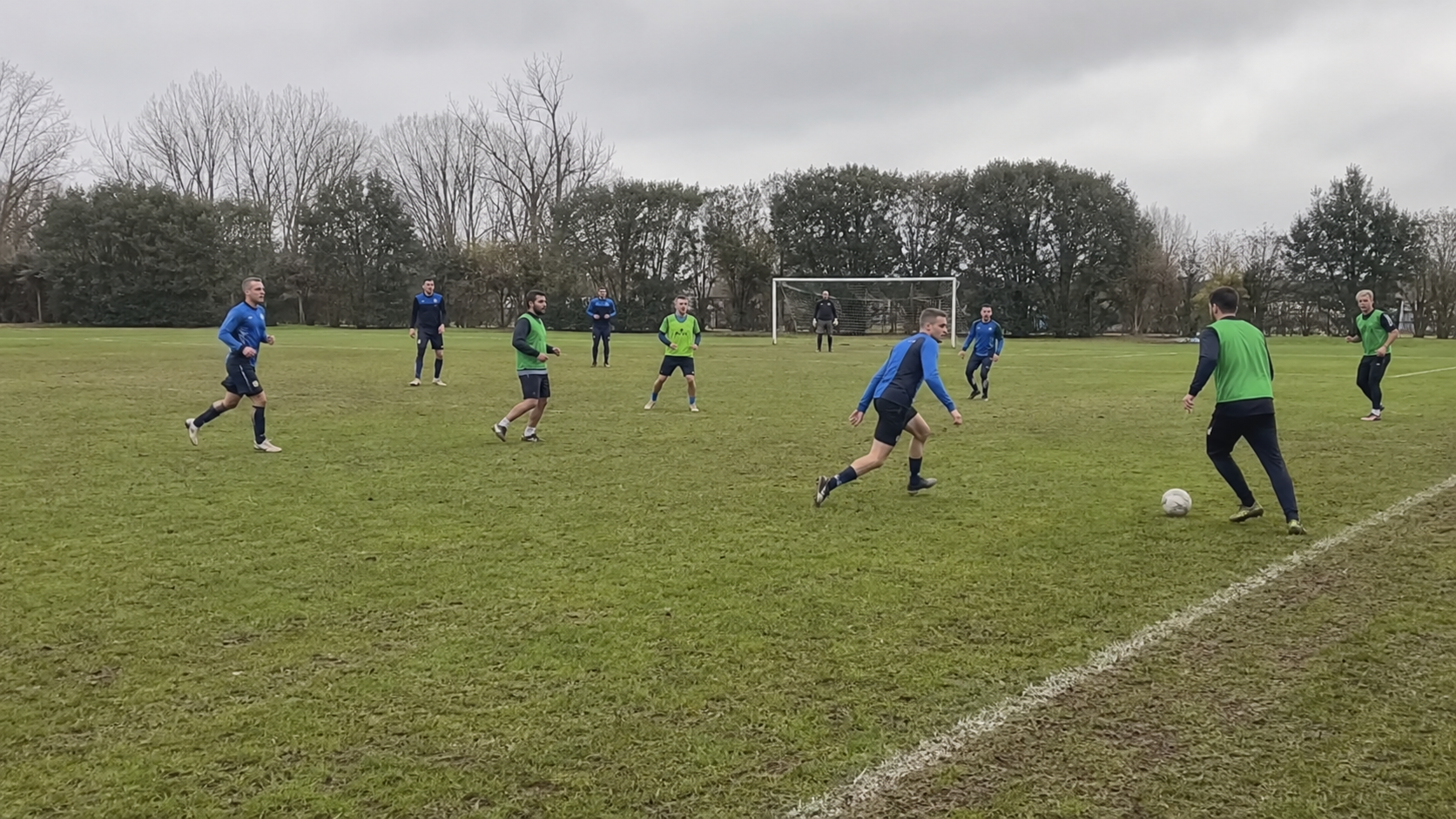
Guiding the opponent’s build-up can be developed through positional games and small-sided games in which the defending team earns points for regaining possession in specific areas.
The coach can mark two wide channels and award additional points for winning the ball in those spaces. Rules can also be introduced to encourage the team to protect the centre and guide the opponent towards the outside.
The exercises should include opposition, a clear direction of play and opportunities to make decisions. Players should not simply memorise movements. They must learn to recognise the position of the ball, the opponent’s body orientation, the quality of the pass and the right moment to intensify the pressure.
Conclusion
Guiding the opponent’s build-up towards a desired area transforms pressing from a physical effort into an organised tactical action. The team does not try to cover every option at the same time. It closes the dangerous solutions, intentionally offers a specific direction and prepares to regain the ball in that area.
The message to the players should be clear:
We do not chase the ball. We control its path and guide it towards the area where we want to regain possession.
Intelligent pressing does not begin at the moment of recovery. It begins when the opponent is encouraged to choose the solution our team has already prepared for.