Pressing is often associated with intensity, aggression and covering large distances. However, a team can run a lot without pressing effectively.
Real pressing is not simply about closing down the player in possession as quickly as possible. It is about controlling space, blocking passing options and coordinating the movements of the entire team.
The principle is simple:
We do not press to chase the ball. We press to control the opponent’s next decision.
The first player determines the direction
The player who closes down the ball carrier should not run directly and without control. The angle of approach must remove one option and guide the opponent towards the desired area.
Through a curved run, the pressing player can:
- apply pressure to the ball;
- block a pass to a teammate;
- protect the central area;
- guide the build-up towards the touchline;
- force the opponent to use their weaker foot.
The first player does not necessarily have to win the ball. Their role may be to provoke the pass that the team is prepared to attack.
Pressing is a collective action
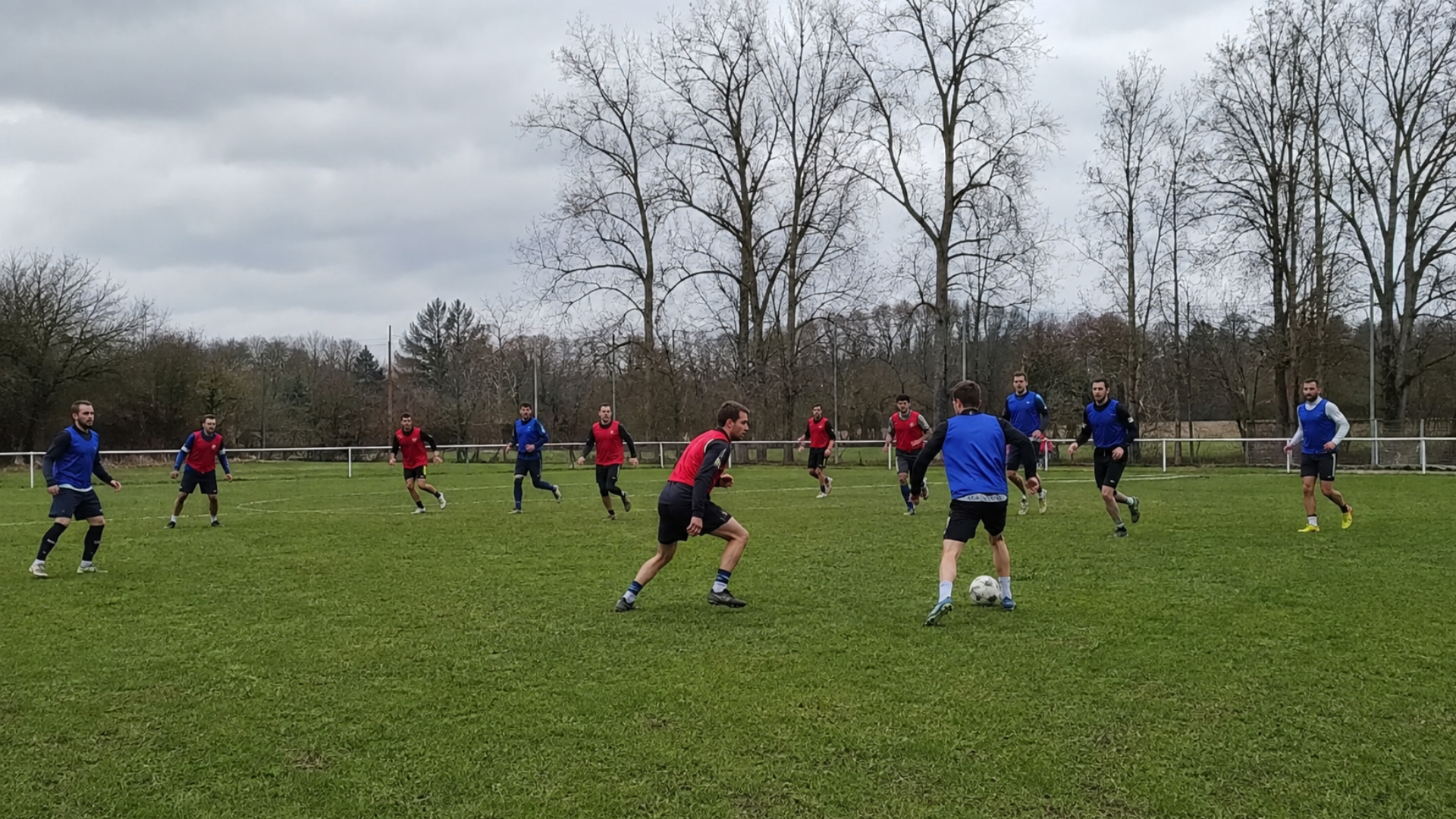
If only one player attacks the ball while their teammates remain too far away, the opponent can bypass the pressure with a simple pass.
When the press is triggered:
- the first player pressures the ball carrier;
- nearby teammates close the passing options;
- the midfielders protect the central area;
- the defensive line steps forward;
- the players on the opposite side move towards the centre;
- the entire team reduces the distances between the lines.
Pressing works when all eleven players react to the same signal.
Pressing triggers
A team cannot attack the ball continuously with the same intensity. The players must recognise the moments when the opponent becomes vulnerable.
The main pressing triggers include:
- a slow or inaccurate pass;
- a poor first touch;
- receiving the ball with the back to play;
- a pass onto the weaker foot;
- a pass towards the full-back;
- a backward pass to the goalkeeper;
- a high ball that is difficult to control;
- an isolated ball carrier near the touchline.
The reaction must begin while the ball is travelling. If the team waits for the opponent to control it and look up, the advantage of the moment disappears.
Compactness gives the press its strength
Pressing becomes effective when the team reduces the space available to the opponent. The distances between the forwards, midfielders and defenders must remain short.
Compactness allows the team to:
- support the player applying pressure;
- close nearby passing options;
- intercept passes;
- win the second ball;
- continue the pressure if the first action is bypassed.
Without the lines behind stepping forward, pressing becomes a series of individual runs.
Pressure on the ball and protection of the space in behind
The behaviour of the defensive line depends on the pressure applied to the ball carrier.
If the opponent is under pressure and cannot look up, the defensive line can advance and compress the pitch. If the opponent has time and their body is facing forward, the defenders must be prepared to protect the space behind them.
The rule is clear:
Real pressure on the ball – we can step forward. No pressure on the ball – we protect the space in behind.
Regaining Possession Is Not the Only Objective
Effective pressing does not always have to produce an immediate recovery. It can force the opponent to:
- pass backwards;
- play towards the touchline;
- attempt a long pass;
- use their weaker foot;
- abandon the short build-up;
- make a decision under pressure.
If the opponent is forced to play long and the team wins the duel or the second ball, the press has achieved its objective.
What happens if the press Is bypassed?
When the opponent breaks the first line, the players should not continue chasing without organisation.
The players who have been bypassed recover their positions, the next line delays the opponent’s progress, and the team protects the centre and restores compactness. If another opportunity appears, the press can be triggered again.
An organised team knows not only when to press but also when to abandon the pressure and reorganise.
Common mistakes
The most common problems include:
- running directly towards the ball without blocking an option;
- initiating the press individually;
- leaving excessive distances between the lines;
- the defensive line remaining too deep;
- failing to protect the central area;
- continuing to press after the pressure has been bypassed;
- concentrating every player around the ball;
- being unprepared for a long pass.
Intensity without organisation wastes energy and creates spaces for the opponent.
Conclusion
Pressing is not a competition to see who can run the most. It is a collective method through which the team controls the opponent’s time, space and available options.
The message to the players should be clear:
One player attacks the ball, the others close the options, and the entire team moves forward together.
Effective pressing does not begin with the legs. It begins with recognising the right moment and understanding each player’s role.