
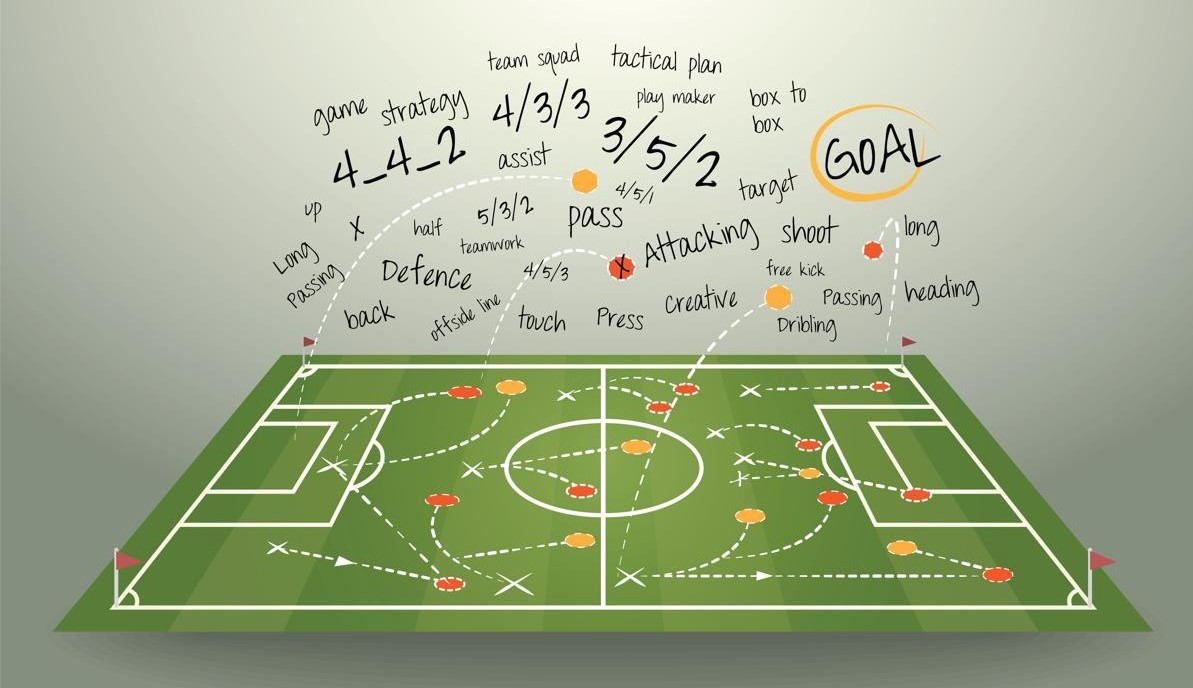
What to do when your tactical game plan fails – A coach’s real-time survival guide
In modern football, even the most detailed tactical preparation can fall apart on match day. Whether the opponent has adapted better, your players struggle with execution, or the game dynamic changes unexpectedly — great coaches aren’t those with perfect plans, but those who adapt fast under pressure.
Here’s how to stay in control when your tactical plan isn’t working:
1. Real-time diagnosis: Identify what’s NOT working
Before matking any rash decisions, ask:
-
Is the opponent’s pressing too effective?
-
Are you failing to create numerical superiority?
-
Have you lost midfield control?
-
Is your buildup blocked by their press?
A calm, accurate analysis helps you intervene with precision — not panic.
2. Simplify the game
When your structure breaks down, go back to core principles:
-
Short, safe passes to regain possession;
-
Avoid risky plays in your defensive third;
-
Compact your defensive shape;
-
Regroup quickly after losing the ball.
Simplicity stabilizes. Confidence and rhythm will follow.
3. Tactical adjustments: switch systems when needed
Always have a plan B ready:
-
Switch from a 4-2-3-1 to a 4-4-2 to add another forward;
-
Insert a box-to-box midfielder to win central duels;
-
Bring on impact players with pace or 1v1 ability.
Remember: it’s not the system that wins matches — it’s how players interpret it.
4. Clear in-game communication
Use breaks in play or halftime to reset focus with short, actionable messages:
-
“When we lose the ball, don’t press alone — drop and delay!”
-
“Let the full-backs push higher — we need width!”
Stay composed. Avoid yelling. Your clarity becomes their compass.
5. Confidence and composure from the bench
The team draws energy from you. Nervous, reactive behavior spreads.
No matter the score, maintain calm authority. Sometimes a single, thoughtful change is enough to shift momentum entirely.
6. Post-match reflection: Learn from the failure
Once the final whistle blows:
-
What could you have changed earlier?
-
Was it a problem of strategy or execution?
-
Were key scenarios undertrained?
Games where the plan fails are the ones that make you a better coach. They sharpen your adaptability and decision-making.
Conclusion
Tactics matter. But real-time adaptation wins matches. There’s no such thing as a perfect plan — only coaches who know how to reshape failure into victory.
Be that coach. Analyze. Simplify. Adapt. Communicate. Because football is played — and won — in real time.