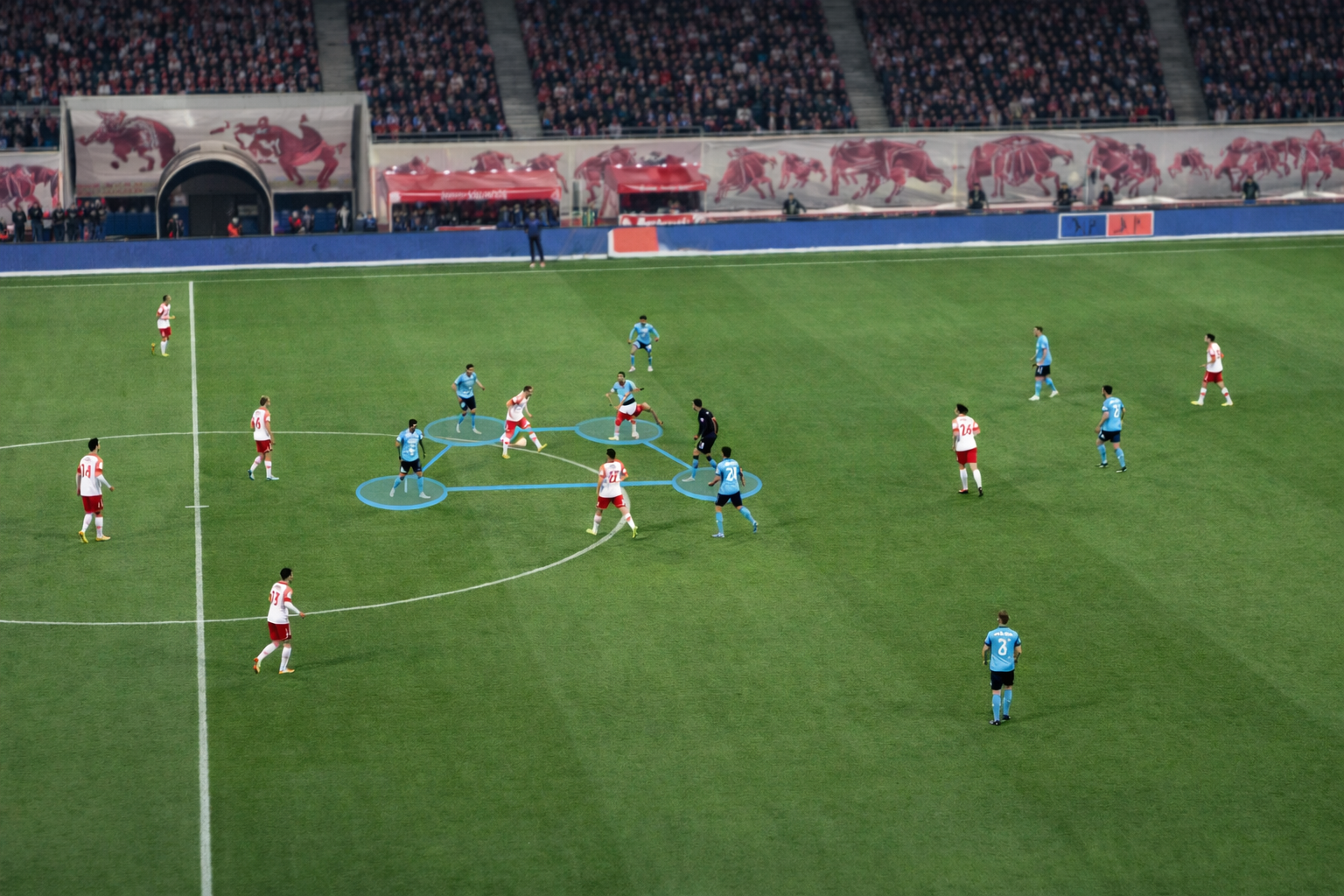
In football, many problems blamed on lack of speed or effort are, in reality, positioning problems. Teams that control the game are not necessarily the fastest ones, but those that maintain correct distances between players and lines. This tactical detail is often ignored — yet it is decisive.
1. Distances create time
When players are well positioned, time appears naturally. Passes become simpler, decisions clearer, and the game flows without rushing.
2. Correct positioning reduces unnecessary running
A well-structured team runs less, but more efficiently. Speed compensates for poor positioning; correct positioning eliminates the need for constant sprinting.
3. Short distances support effective pressing
Pressing only works if the lines stay close together. Without compactness, pressing becomes an individual effort and opens large spaces.
4. Large distances break the connection between phases
When attack and defence are too far apart, transitions become long and dangerous. Control is lost immediately after losing possession.
5. Positioning beats speed in critical moments
In the final minutes of matches or under pressure, fast but poorly positioned teams collapse. Well-organised teams remain stable and control the rhythm.
6. Game control starts without the ball
Correct off-the-ball positioning dictates the options available to the opponent. It is not speed that stops them — it is lack of space.
Conclusion for coaches
Game control is not achieved through maximum speed, but through correct distances.
You can compensate for lack of speed with positioning,
but you cannot compensate for poor positioning by running more.