
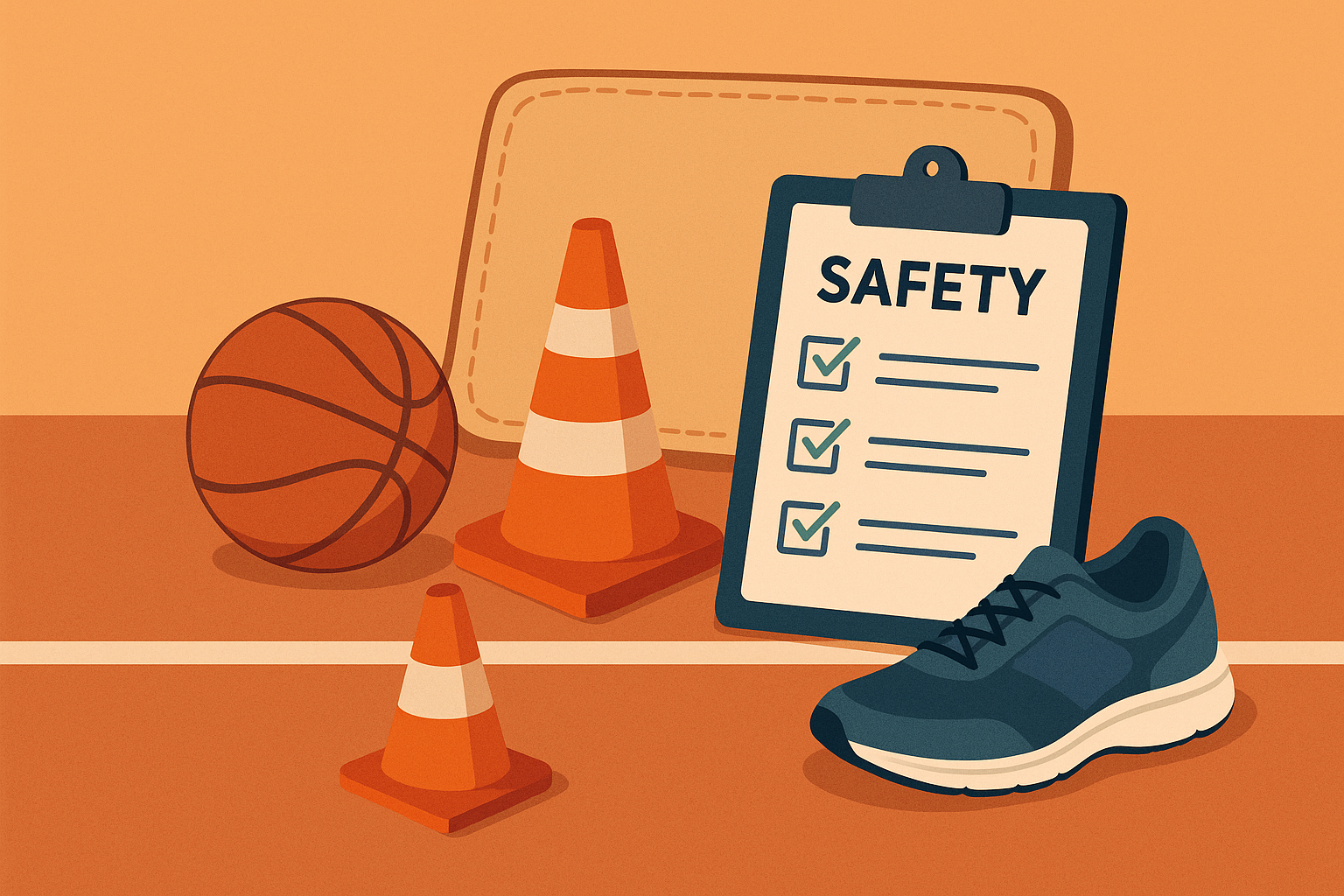
Keeping students safe and active
Physical education and sport lessons play a vital role in students’ overall development — improving health, teamwork, and coordination.
However, they also involve a certain level of physical risk compared to other school subjects.
Sprains, strains, slips, or collisions can happen when organization, supervision, or preparation are lacking.
Creating a safe and supportive environment where students can move confidently, learn effectively, and enjoy sports is one of the main responsibilities of every physical education teacher.
⚠️ Common causes of injuries in PE lessons:
-
Skipping or performing an inadequate warm-up;
-
Wearing improper footwear or clothing;
-
Unsafe playing surfaces (slippery, uneven, or obstructed);
-
Lack of discipline or focus during games;
-
Overexertion or incorrect technique;
-
Ignoring the rules of the activity.
🧭 Effective strategies for injury prevention in physical education
1. Proper warm-up and cool-down
A complete warm-up is the most effective way to prevent muscle and joint injuries.
Include mobility, stretching, and dynamic movement drills, then end the lesson with relaxation and breathing exercises to support recovery.
🧠 A safe start leads to a safe finish.
2. Check the playing area and equipment
Inspect the surface before each lesson: it should be clean, dry, and obstacle-free.
Use age-appropriate equipment — soft balls, flexible cones, and protective mats — to minimize impact and risk.
3. Set clear safety and discipline rules
Explain and demonstrate safety rules before starting any activity.
Maintain supervision throughout the session and act immediately if unsafe behavior occurs.
⚖️ Golden rule: Safety always comes before competition.
4. Adapt activities to students’ skill levels
Each student learns at a different pace.
Avoid exercises that are too difficult or physically demanding for some.
Offer alternative tasks and demonstrate correct techniques step by step to ensure everyone participates safely.
5. Use proper personal equipment
Sports shoes should provide good support, cushioning, and grip.
Avoid allowing students to participate in slippers, boots, or casual shoes.
Clothing should enable full range of motion and meet safety standards for PE lessons.
6. Promote injury awareness and prevention
Encourage students to take care of their bodies not only during PE lessons but also in other organized or informal sports activities.
Teach them how to recognize early signs of fatigue or strain and the importance of recovery and rest.
🚑 What to do if an injury occurs:
-
Stop the activity immediately.
-
Provide first aid according to the severity of the injury.
-
Inform the school nurse and parents.
-
Evaluate and adjust your lesson plan to prevent similar incidents in the future.
🏁 Conclusion: A culture of safety in physical education
Injury prevention in physical education is not about luck — it’s about planning, communication, and teacher responsibility.
A student who feels safe will participate more confidently, show consistent progress, and develop a positive lifelong attitude toward sport and physical activity.
🔎 How do you promote safety in your PE lessons?
✍️ Share your best strategies or experiences in the comments below.
📤 Share this article with fellow PE teachers — together, we can build a safer, more engaging, and more effective learning environment for every student.