In the development of children and youth players, transitions are often overtrained or misunderstood.
Many coaches try to copy models from elite football without considering age, cognitive level, and the real objectives of player development.
At this level, transitions are not about maximum intensity, but about understanding, reaction, and decision education.
This article is built in a methodical and educational way, ideal for academies and youth coaches.
1. Why transitions are important at young ages
Transitions help children:
-
understand the link between attack and defense;
-
react to changes in possession;
-
develop attention and game orientation.
Transitions are lessons in game intelligence, not physical conditioning tests.
2. What children must learn about transitions
a) Immediate reaction to the change of possession
-
to quickly notice the loss or recovery of the ball;
-
to turn toward the game;
-
to remain involved in the action.
Reaction matters more than the result.
b) Correct movement direction
-
after losing the ball → approach the ball or retreat simply;
-
after regaining possession → orient toward free space.
You teach direction, not patterns.
c) Playing as a team
-
supporting teammates;
-
staying close;
-
basic communication.
Transitions develop collective spirit.
3. What should NOT be forced with children
-
Aggressive and prolonged pressing
-
Rigid transition schemes
-
“Perfect” reactions like in senior football
-
Excessive corrections during play
-
Exclusive focus on results
With children, understanding comes before efficiency.
4. Transitions in youth football: what changes
At youth level, the focus gradually shifts toward:
-
recognizing the context;
-
deciding between pressing and dropping back;
-
more organized transitions.
Differences compared to younger ages:
-
more responsibility;
-
simple but clear rules;
-
first notions of risk and control.
Youth players learn why, not just what.
5. Methodical examples for training transitions
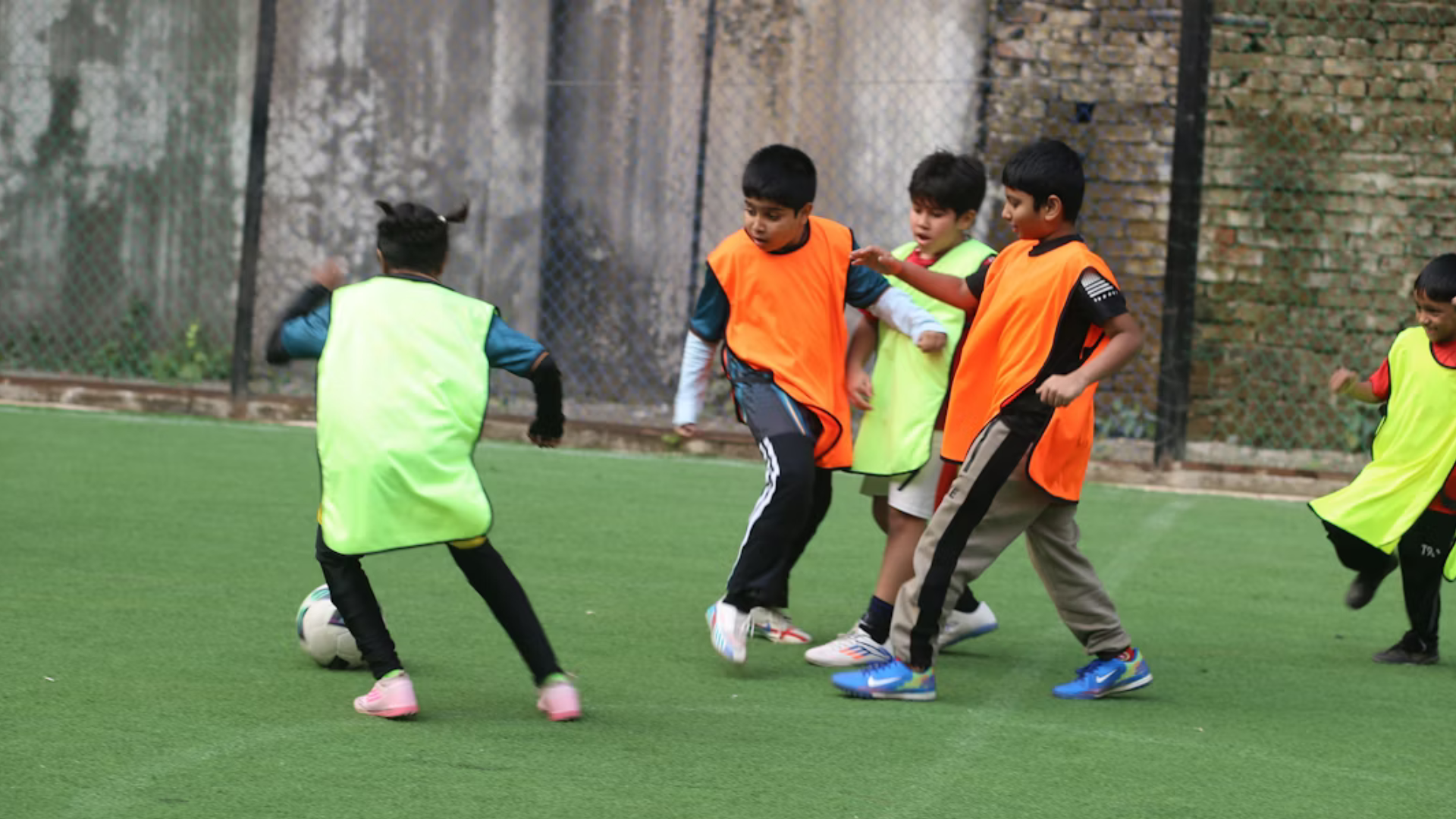
Recommended games:
-
3v3 / 4v4 with quick role changes;
-
games with two small goals;
-
games with an extra ball introduced by the coach.
Educational rules:
-
points awarded for reaction, not just goals;
-
short pauses for questions (“What did you see?”);
-
freedom of decision-making.
6. The coach’s role in teaching transitions
The coach must be:
-
a guide, not a controller;
-
calm, not reactive;
-
consistent, not rigid.
Correction with children:
-
mostly through questions;
-
less through stopping the game;
-
focused on positive feedback.
The coach shapes behavior, not just the drill.
7. Common mistakes in academies
-
Copying professional football
-
Too much focus on physical effort
-
Lack of free play
-
Training transitions without context
-
Excessive emotional pressure
8. Transitions as part of long-term development
For children and youth players, transitions must:
-
feel natural;
-
appear within the game;
-
support creativity.
The final goal:
-
players who understand the game;
-
react correctly;
-
adapt to context.
Do not rush the process.
Transitions mature over time.
Conclusion for coaches
Transitions in children’s and youth football are an educational tool, not a tactical weapon.
A healthy academy:
-
educates reaction;
-
respects age;
-
prioritizes understanding of the game.
What is learned correctly between 10–14 years old will function naturally at 18+.