
Blog
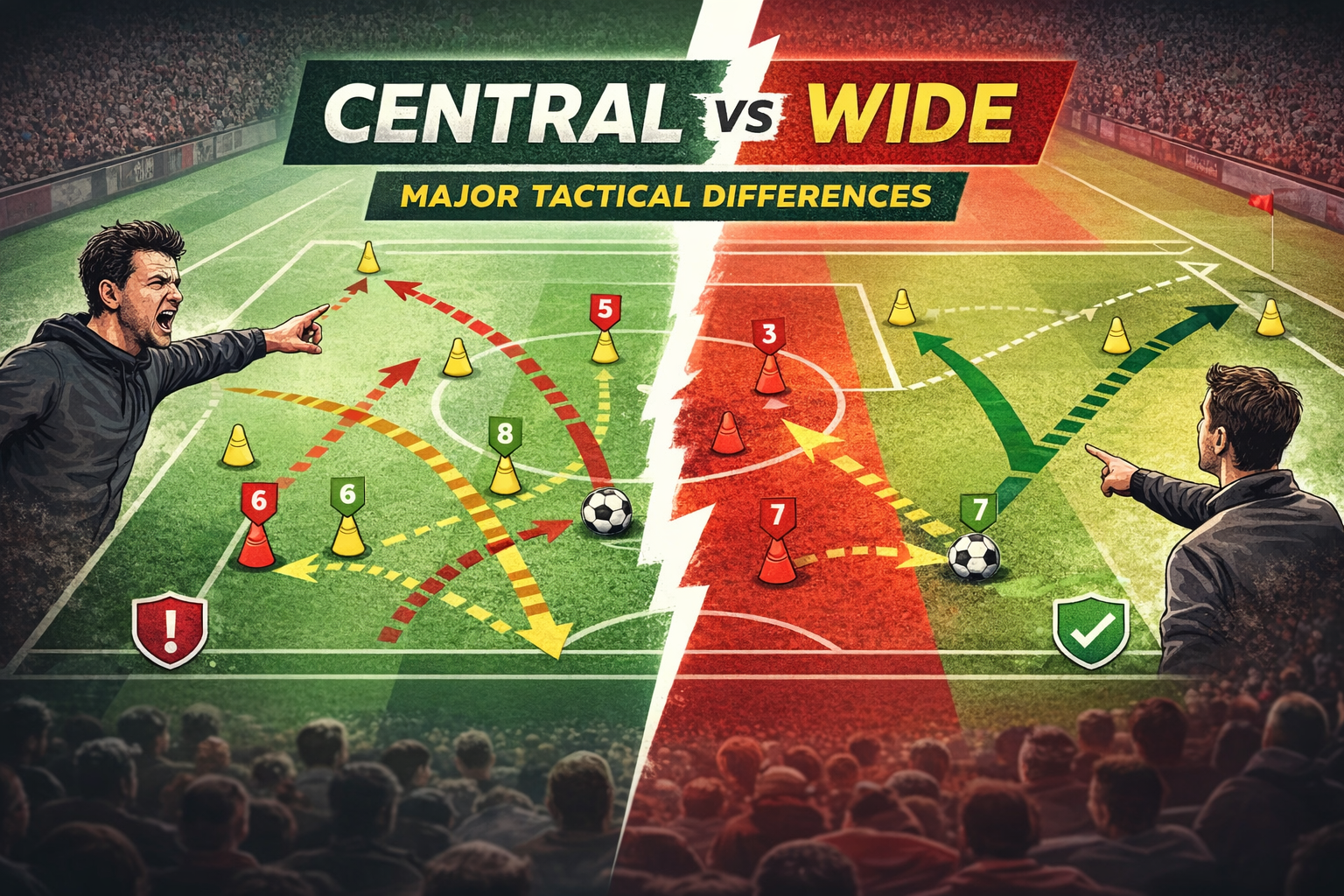
Not all transitions are the same. The major difference is not only the moment (loss or recovery of possession), but the place where the transition occurs. A transition in the central zone has completely different tactical implications compared to one in the wide areas, and coaches who fail to make this distinction treat different situations with the same solutions. This article clarifies the major tactical differences between central and wide transitions,...
Read more
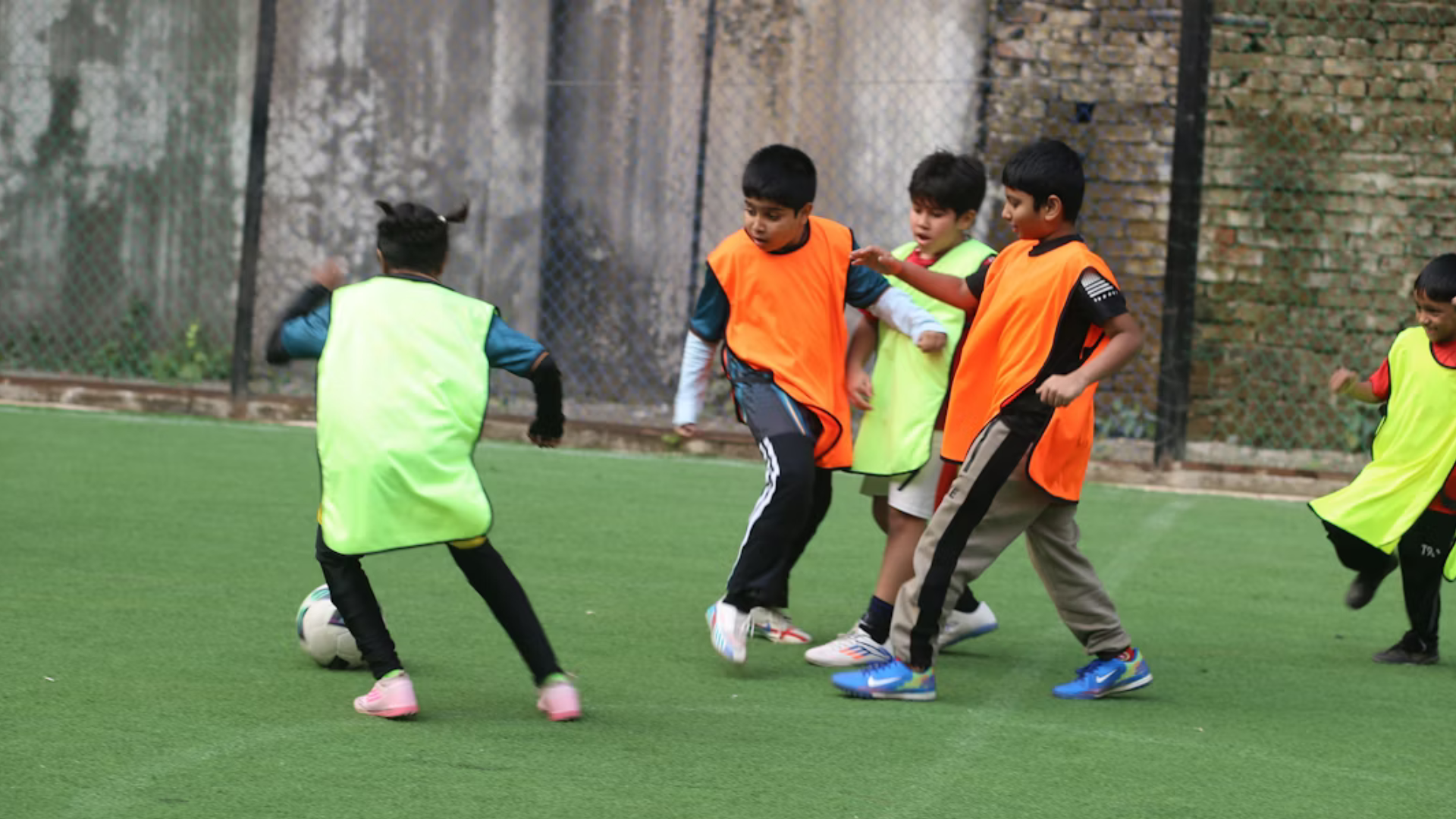
In the development of children and youth players, transitions are often overtrained or misunderstood. Many coaches try to copy models from elite football without considering age, cognitive level, and the real objectives of player development. At this level, transitions are not about maximum intensity, but about understanding, reaction, and decision education . This article is built in a methodical and educational way , ideal for academies...
Read more
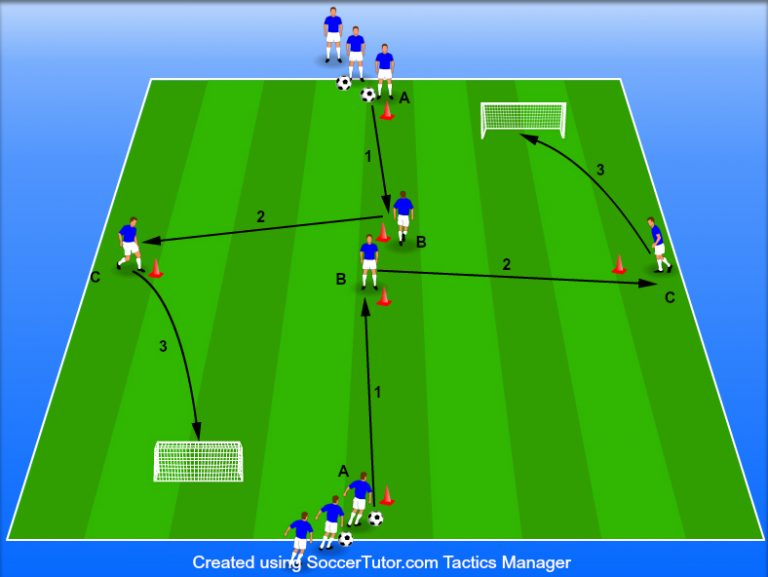
For this week, we have prepared an exercise that can be carried out during the warm-up phase of the training session. Required equipment: cones, balls, two 5-meter goals. The equipment is set up as shown in the image. The first players A will have a ball in their possession. Players A will start the exercise at the same time. Player A passes the ball to player B (1), player B passes the ball to player C (2), and player C plays the ball...
Read more
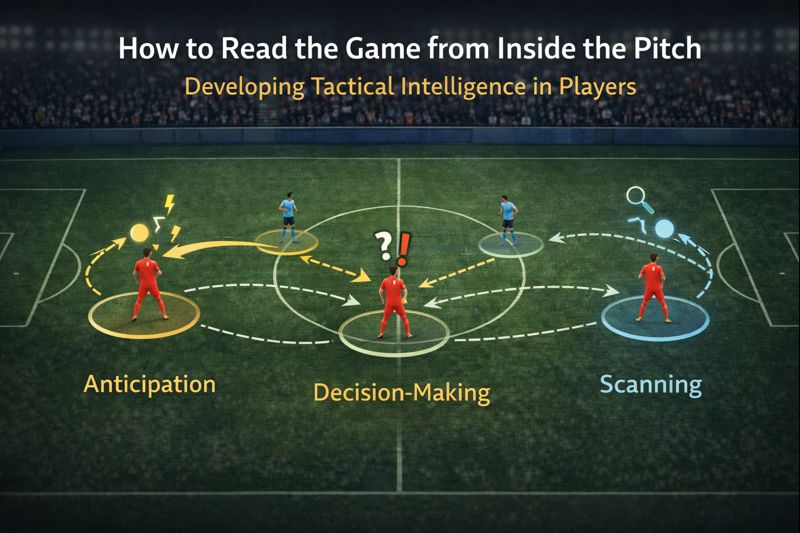
Tactical intelligence does not mean knowing patterns or schemes — it means understanding what is about to happen. Players who “read the game” always seem one step ahead: they choose the right solution, arrive first to the ball, and make simple actions look easy. This ability is built through decision-making, anticipation, and scanning. 1. Reading the game starts before receiving the ball Intelligent players do not react after...
Read more
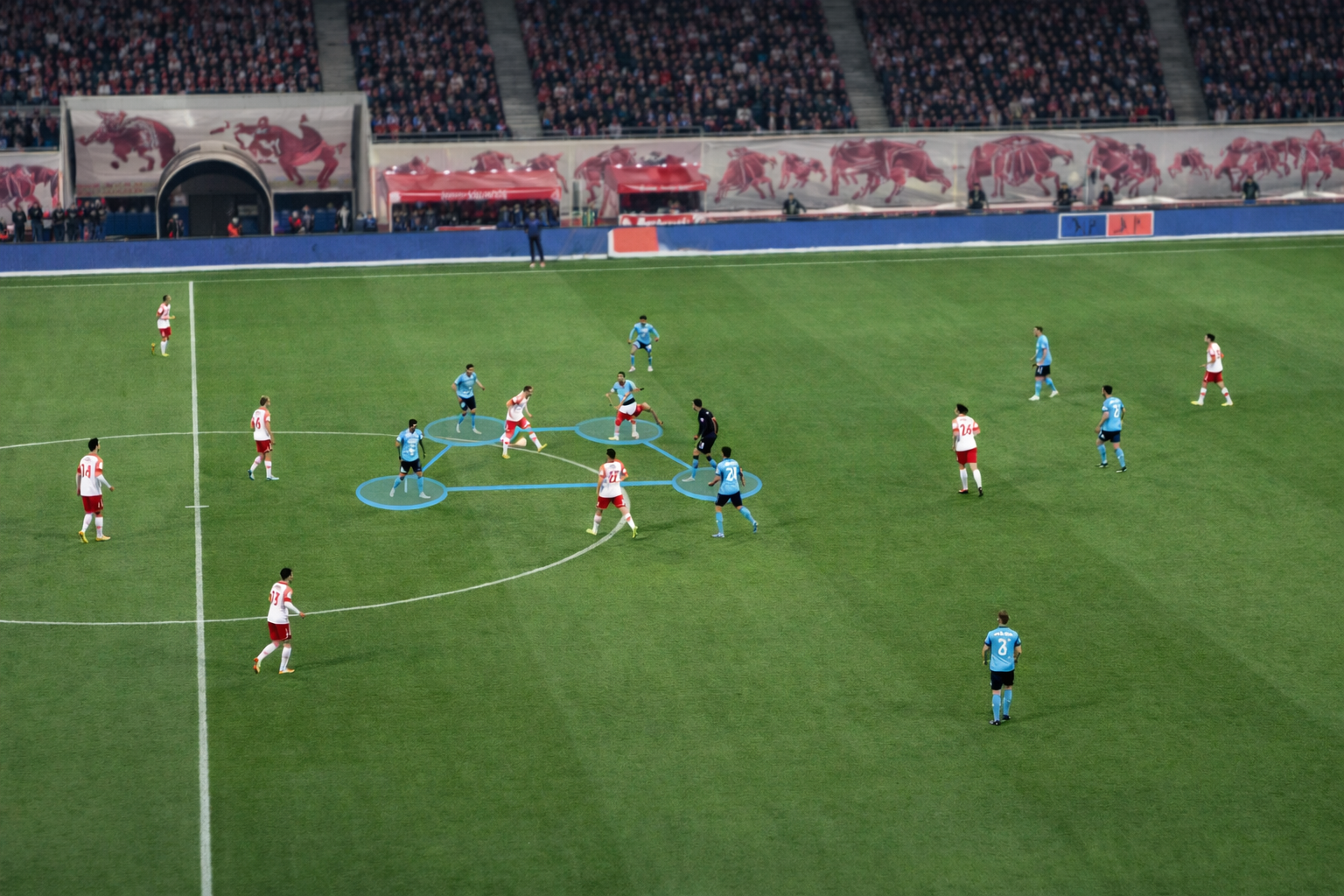
In football, many problems blamed on lack of speed or effort are, in reality, positioning problems. Teams that control the game are not necessarily the fastest ones, but those that maintain correct distances between players and lines. This tactical detail is often ignored — yet it is decisive. 1. Distances create time When players are well positioned, time appears naturally. Passes become simpler, decisions clearer, and the game flows without...
Read more
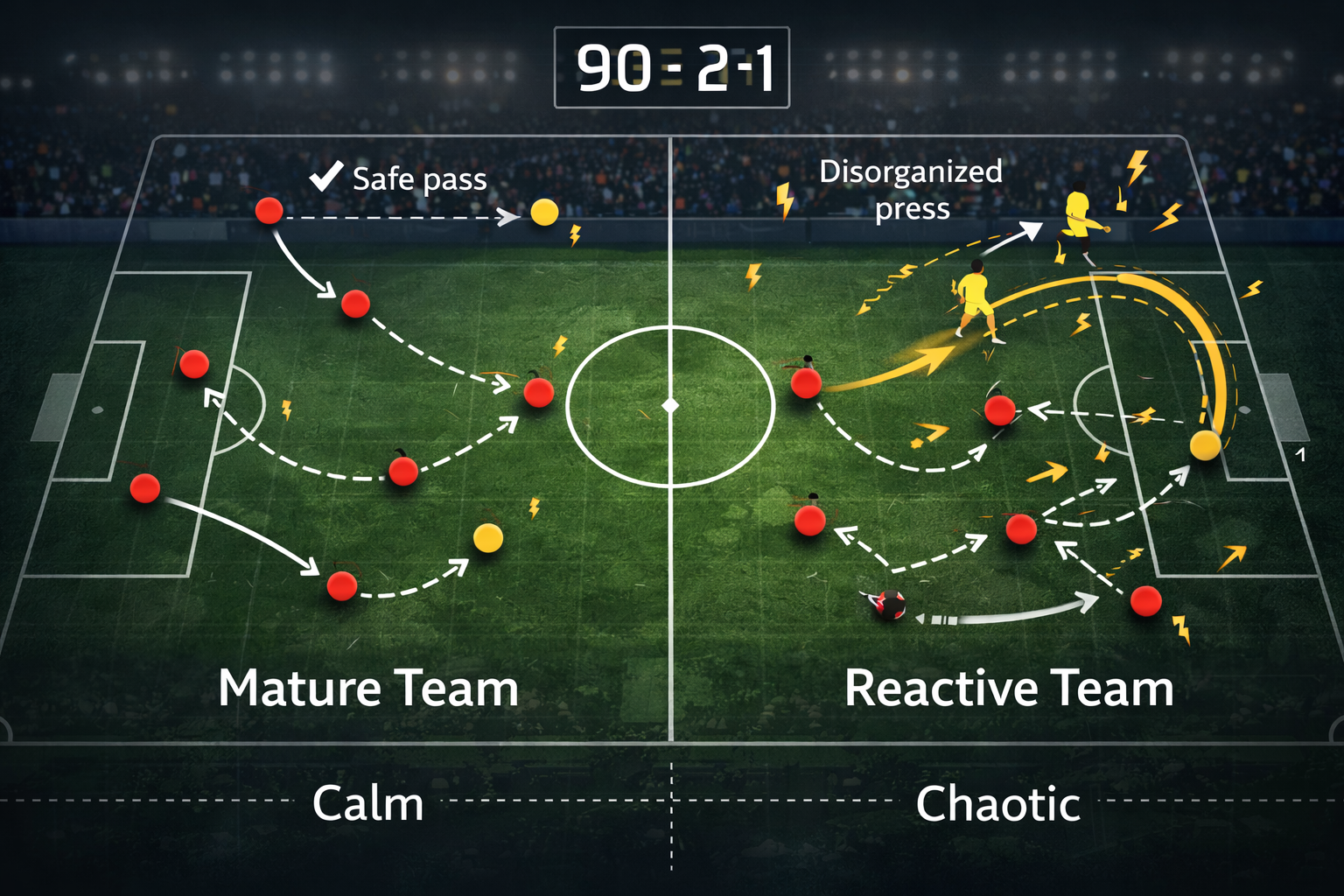
In football, the difference between a good team and a mature one does not appear when the game is under control, but in critical moments: the end of the match, a tight scoreline, pressure from the stands, accumulated fatigue. It is precisely then that transitions become tests of character, intelligence, and self-control. This article analyses how mature teams react in transitions under maximum pressure and what coaches can do to educate decision-making,...
Read more
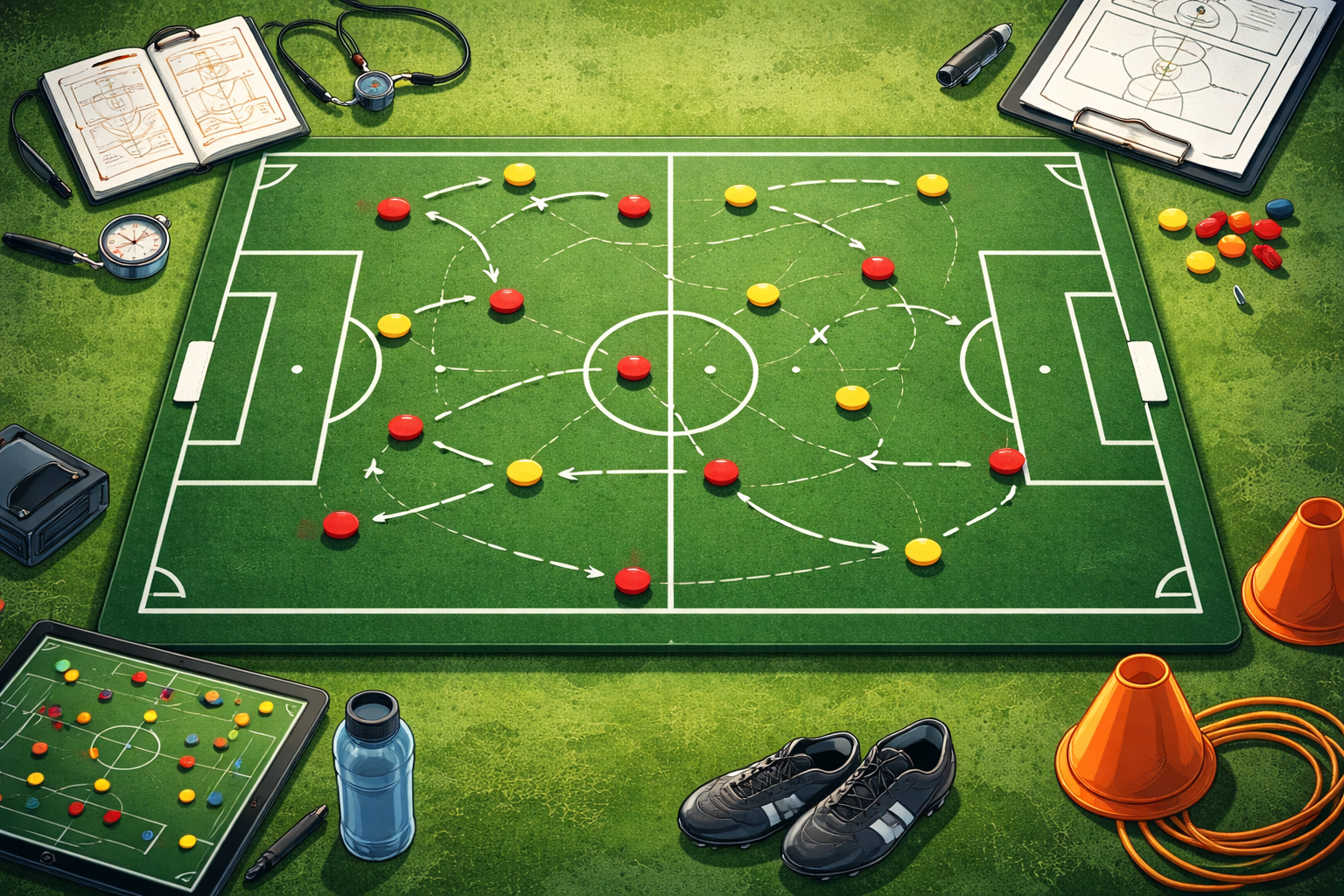
Choosing a playing system is one of the most visible decisions a coach makes — and often one of the most misunderstood. Many start by asking, “What is the best system?” when the real question should be, “What is the right system for my team, right now?” This article helps you choose a playing system logically and realistically, and understand when changing it is necessary — and when it is simply an emotional...
Read more
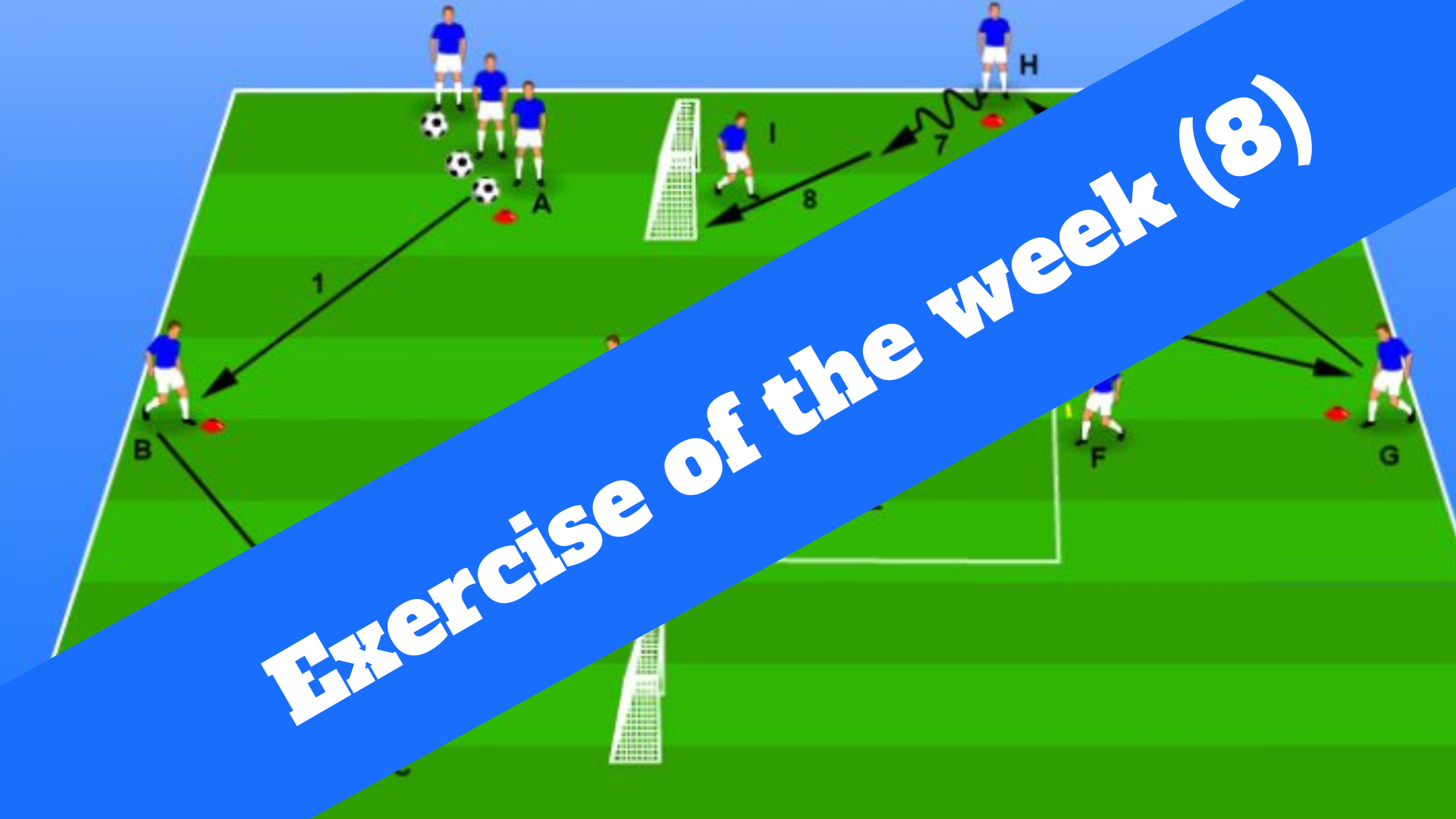
For this week, we have prepared a complex exercise that includes the following elements: – passing the ball; – 2 vs 1 duels; – 1 vs 1 finishing. The exercise can also be carried out during the warm-up phase of the training session. Required equipment: - cones, footballs, two 5-meter goals. Exercise description: The equipment is set up as shown in the image. Between the two goals, a square with 10-meter sides...
Read more
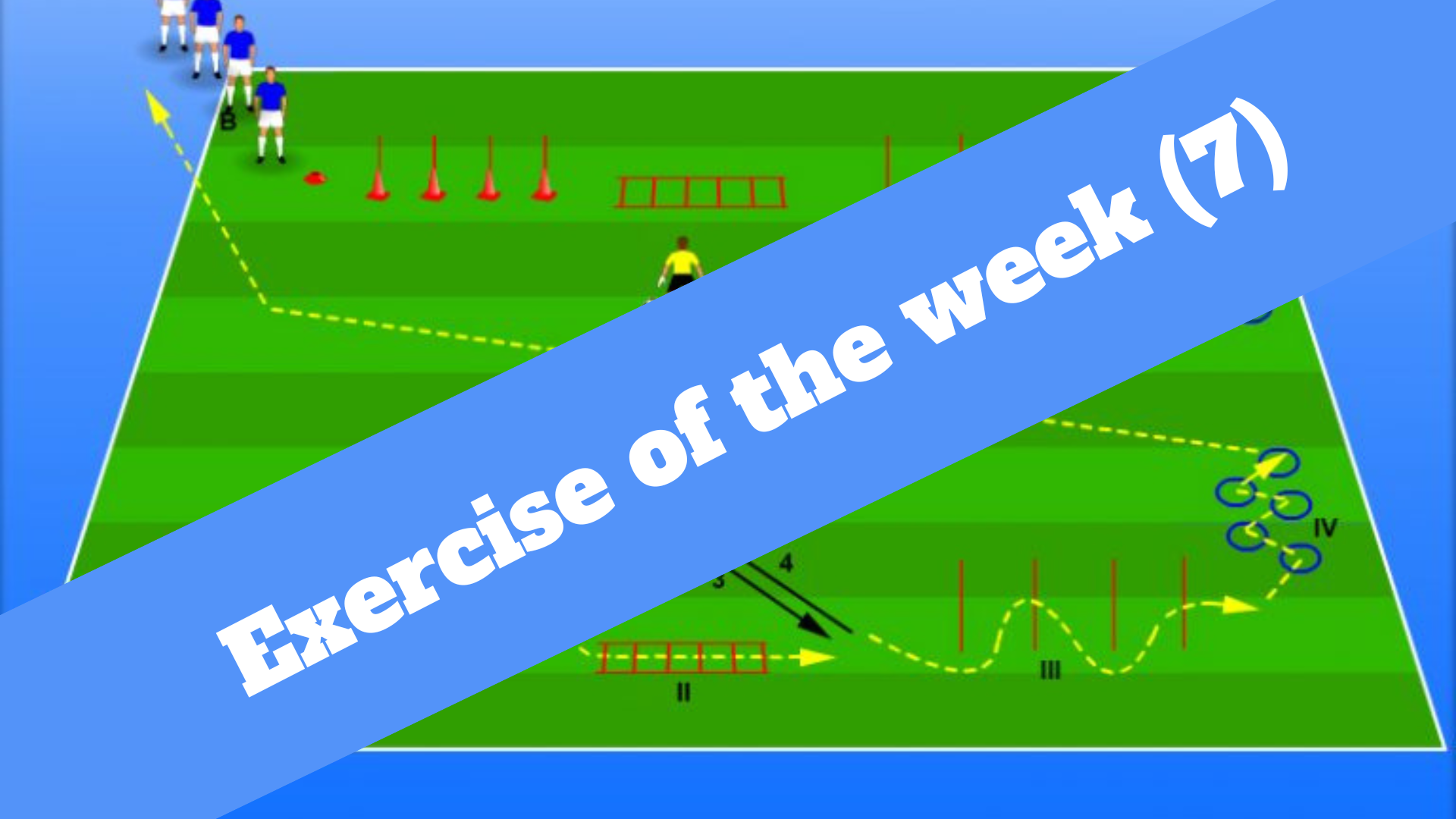
For this week, we have prepared an exercise that can be carried out during the warm-up phase of the training session. Required equipment: cones, poles, two speed ladders, hoops, footballs. Exercise description: Players A and B will start the exercise at the same time. They will perform coordination exercise variations involving lifting the lower limbs over cones with a pole placed on top. They then receive the ball from the goalkeeper...
Read more
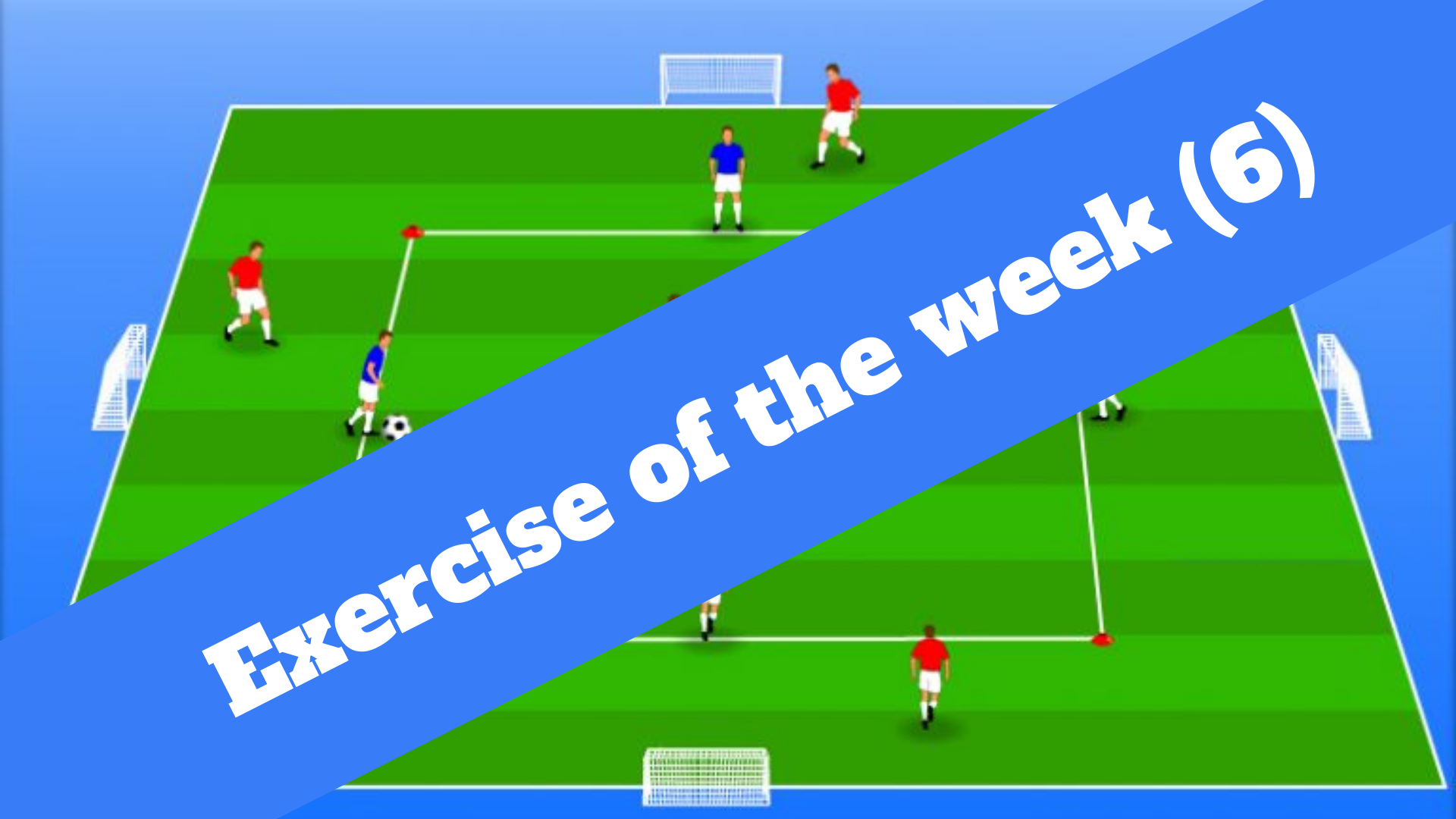
For this week, we have prepared an exercise to train transitions specific to the game of football. Required equipment: cones, 4 small goals. Exercise description: Two identical playing areas will be set up as shown in the image. The dimensions of the areas will depend on the characteristics of the players for whom the exercise is applied. A small goal will be placed in the middle of each side of the large area. Inside the small area,...
Read more
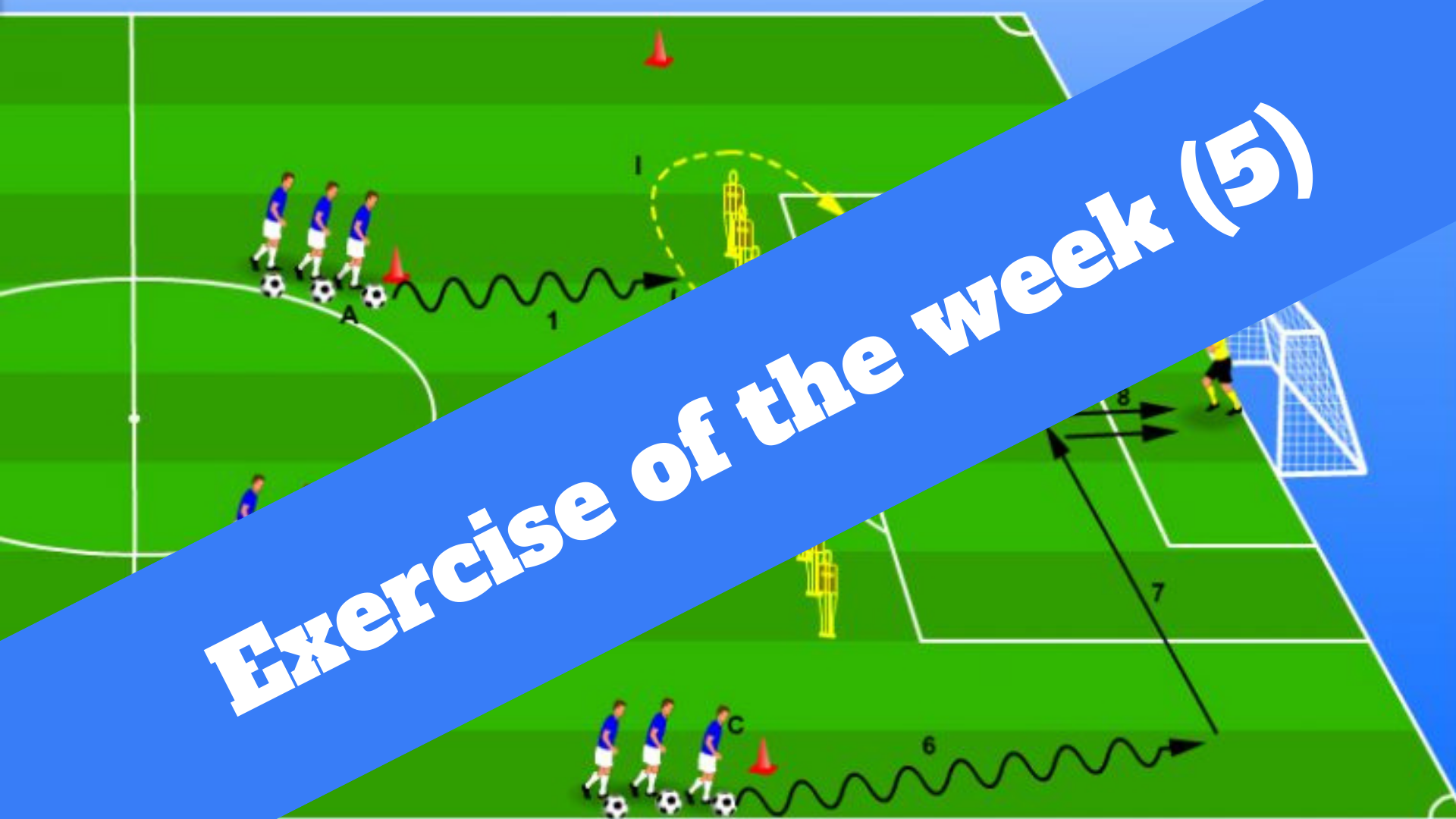
For this week, we have prepared an exercise to develop shooting on goal specific to the game of football. Required equipment: slalom poles, footballs. Exercise description: The group of players will be divided into three groups, and each player will have a ball in their possession. Player A starts the exercise by dribbling the ball up to the slalom poles, performs a short dribble, and finishes with a shot on goal (1,2,3). Player...
Read more
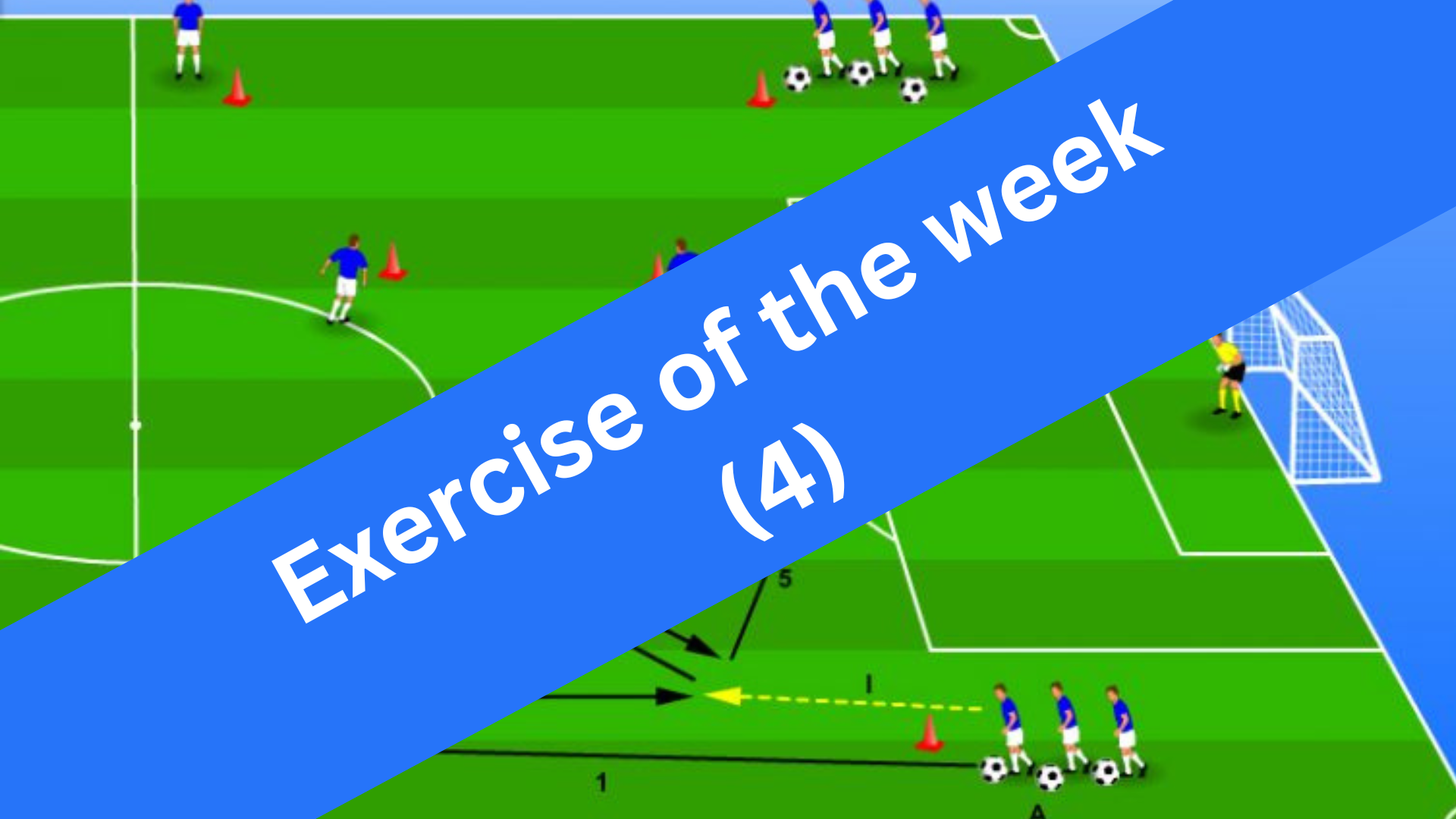
For this week, we have prepared an exercise that can be carried out during the training process to develop shooting on goal. Required equipment: - cones, many balls. Exercise description: The players are positioned as shown in the image. Each player A will have a ball in their possession. The exercise is performed alternately on the left and right sides. Player A passes the ball to player B (1), player B passes the ball to player...
Read more
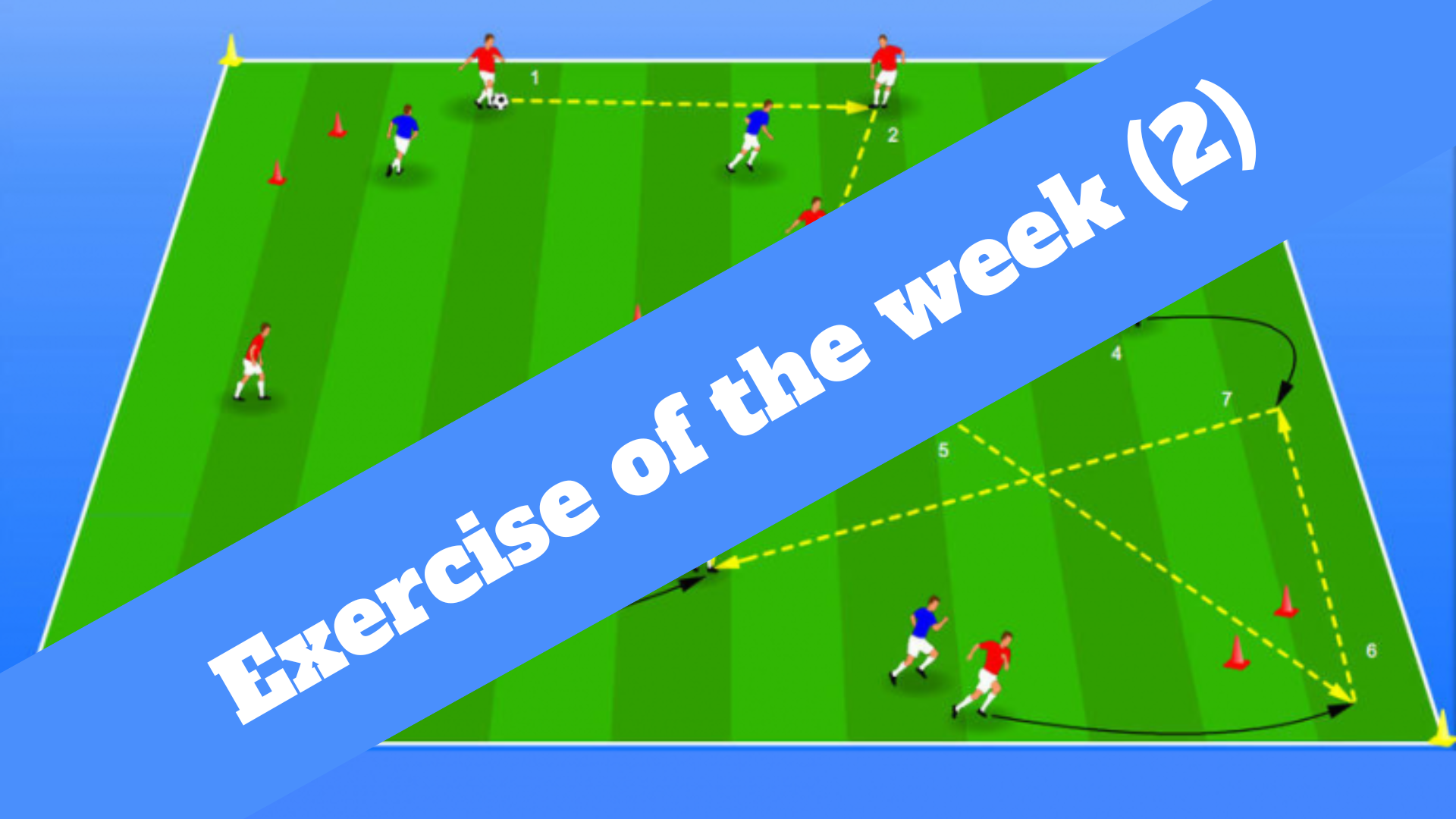
For this week, we have prepared a ball possession game. A playing area of 40 x 60 meters will be set up, and in the four corners of the area, four 1-meter goals will be created using cones. In the middle of the playing area, there will be two 1-meter goals placed back to back. Inside the area, a 7 vs 7 game will be played. When a team completes 10 consecutive passes, it is allowed to score in one of the goals located on the playing area....
Read more
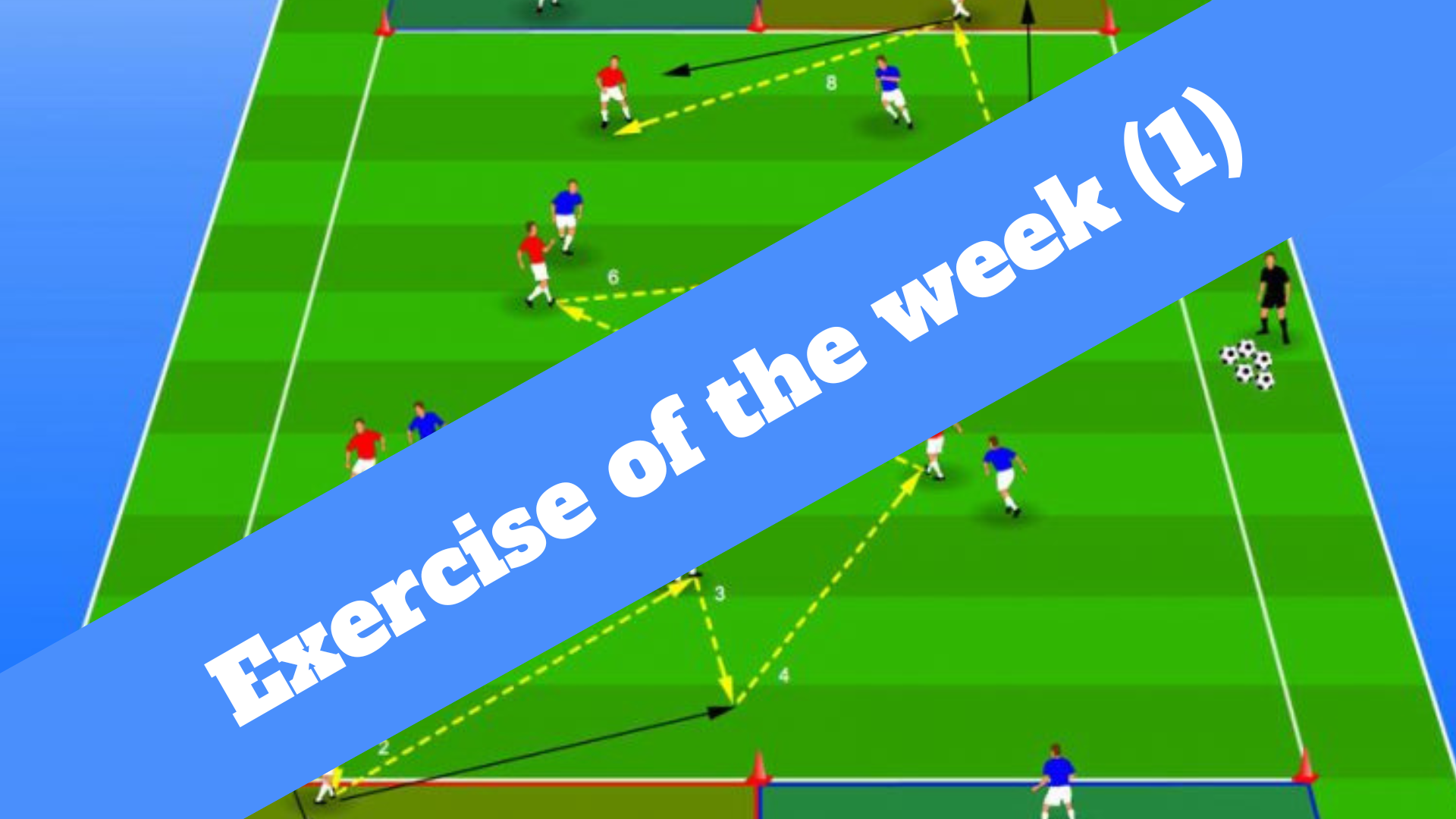
We continue with the “Exercise of the Week” project in 2026 as well. For this week, we propose a ball possession exercise. A pitch of 45 meters in length and 35 meters in width will be set up, and inside this area a 6 vs 6 game will be played. Each team will have two players positioned in the wide zones of the pitch, one on each side. When a player in this zone receives the ball, the player who passed the ball to him takes...
Read more
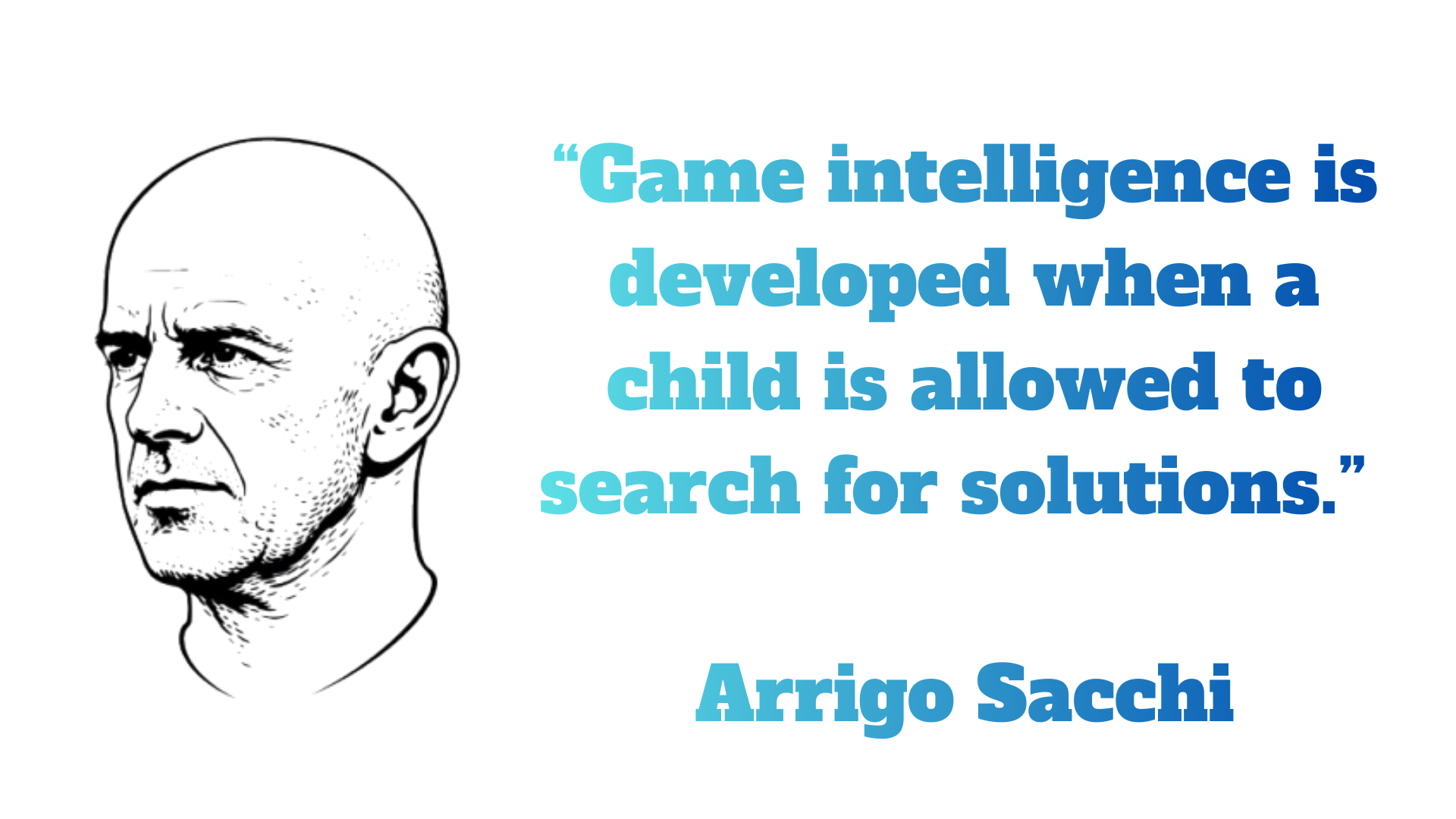
Game intelligence cannot be taught through commands alone. It grows when children are given space to think, experiment, and solve problems by themselves. Arrigo Sacchi’s quote highlights a fundamental truth of youth football: understanding the game is the result of exploration, not instruction overload. When a child searches for solutions on the pitch, they are actively reading the game. They observe teammates, opponents, space, and time....
Read more
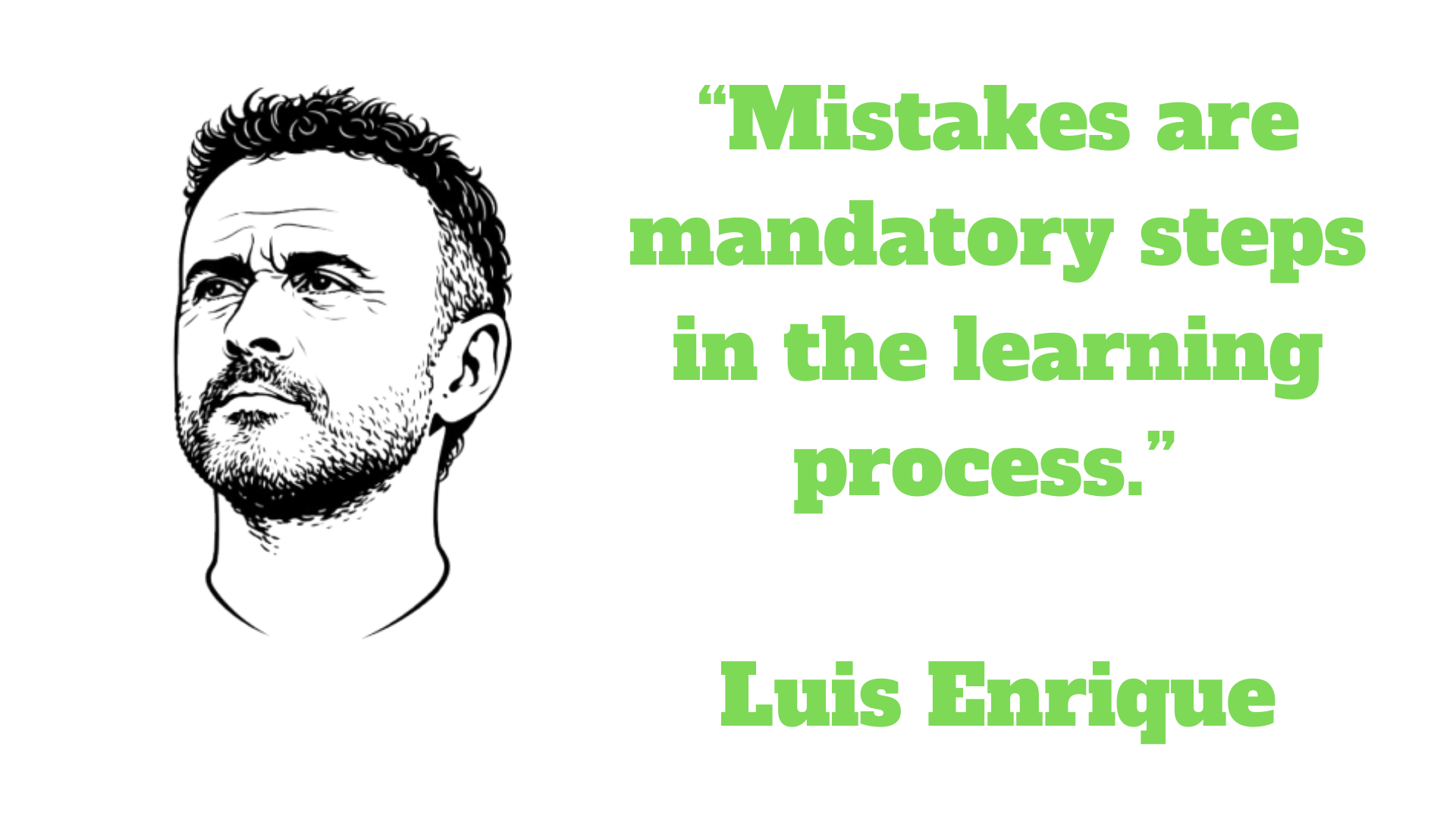
In youth football, mistakes are often treated as problems to eliminate. But in reality, they are essential signals of learning in progress . A child who never makes mistakes is usually a child who never takes responsibility, never explores solutions, and never truly understands the game. Luis Enrique’s quote reminds us of a fundamental truth: development does not happen on a straight line . It happens through trial, error, reflection, and repetition....
Read more
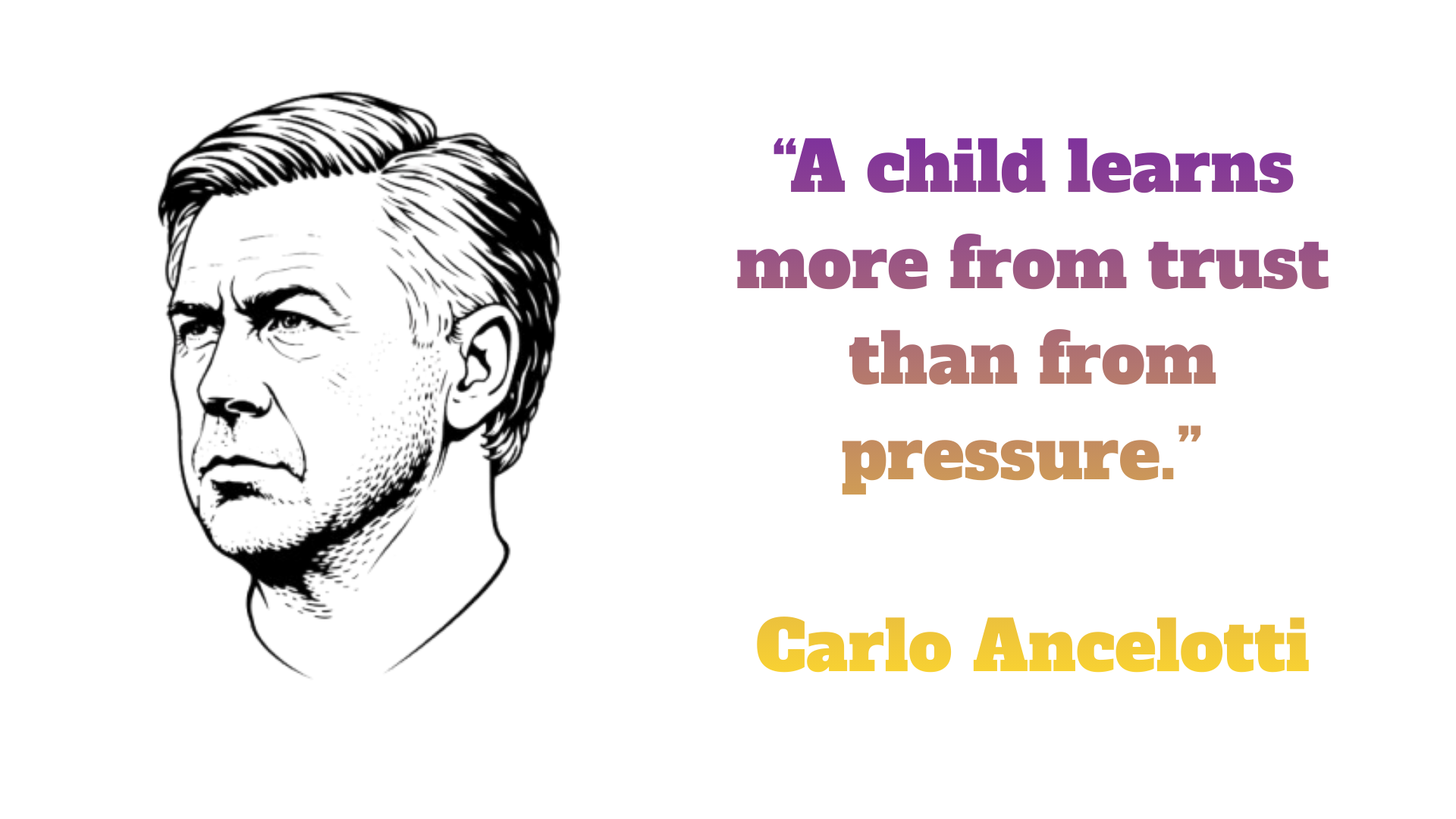
In youth football, progress does not come from constant correction or fear of mistakes. It comes from trust . When a child feels trusted, they dare to try, to think, and to take responsibility. When pressure dominates, learning slows down—and creativity disappears. Trust creates a learning environment where the child feels safe to explore the game. A trusted player scans more, asks questions through actions, and starts to understand why things...
Read more
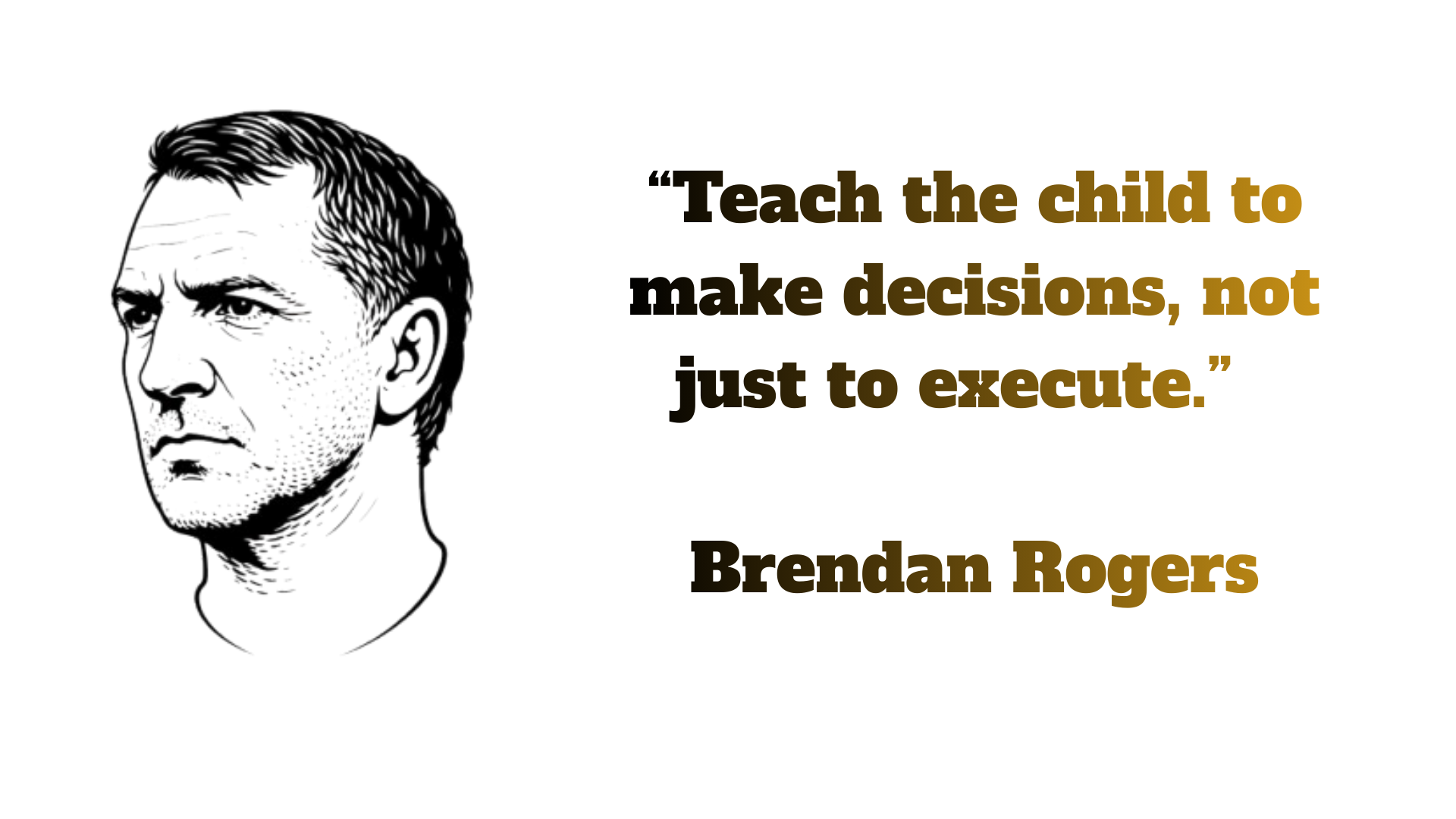
One of the biggest mistakes in youth football is confusing obedience with learning. A child who only executes instructions may look disciplined, but they are not truly developing as a player. Football is a game of decisions. Every touch of the ball forces a choice: pass, dribble, move, wait, or change direction. When children are taught only what to do, they stop learning why to do it. Teaching decision-making means allowing children to think...
Read more
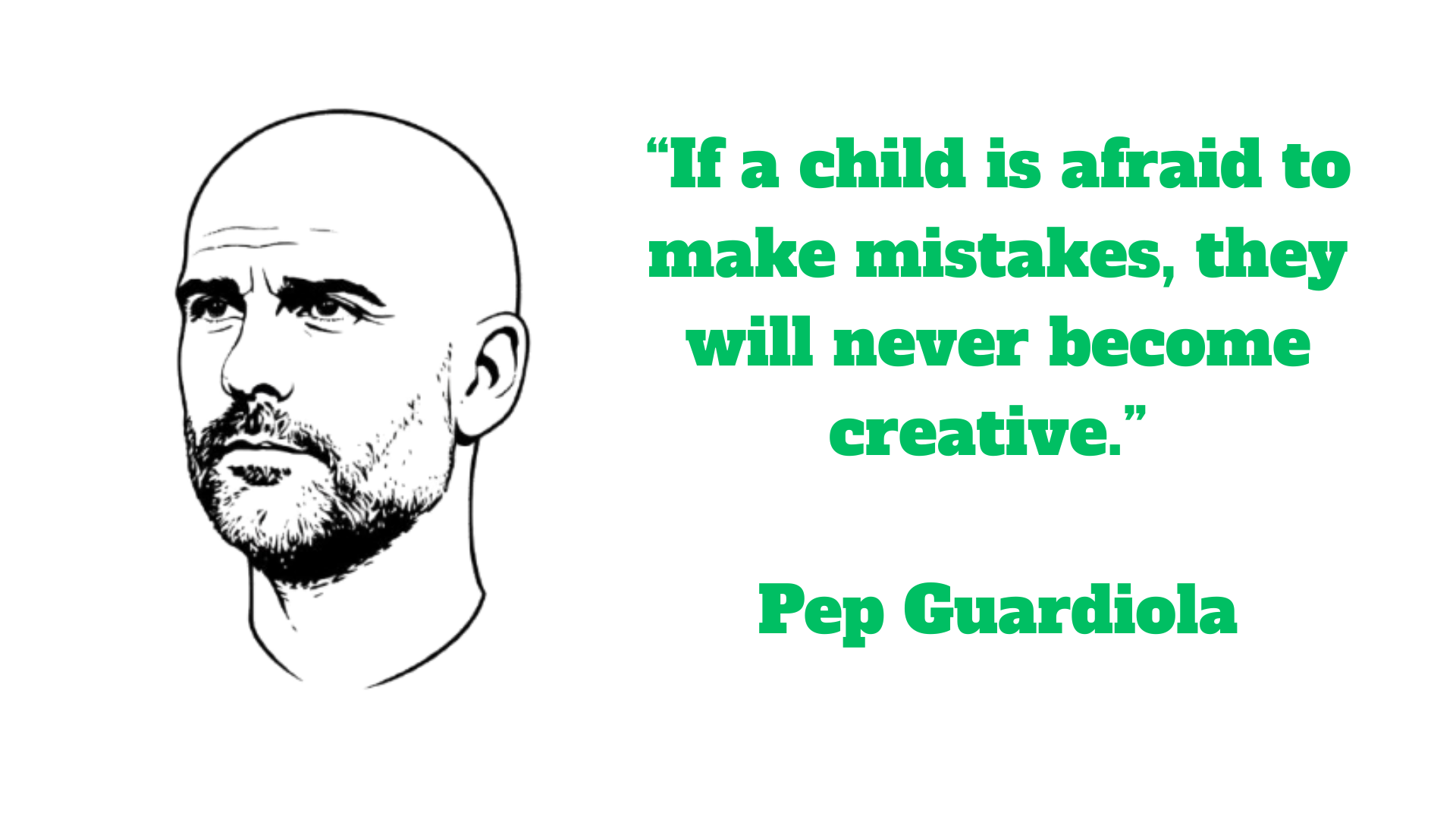
Creativity in football does not come from instructions. It comes from freedom and safety . When a child is afraid of making mistakes, their attention shifts away from the game. Instead of scanning, exploring space, and reading situations, the player focuses on avoiding errors. The result is predictable behavior, rushed decisions, and a gradual loss of confidence. Fear does not educate. It limits. In youth football, mistakes are not signs...
Read more
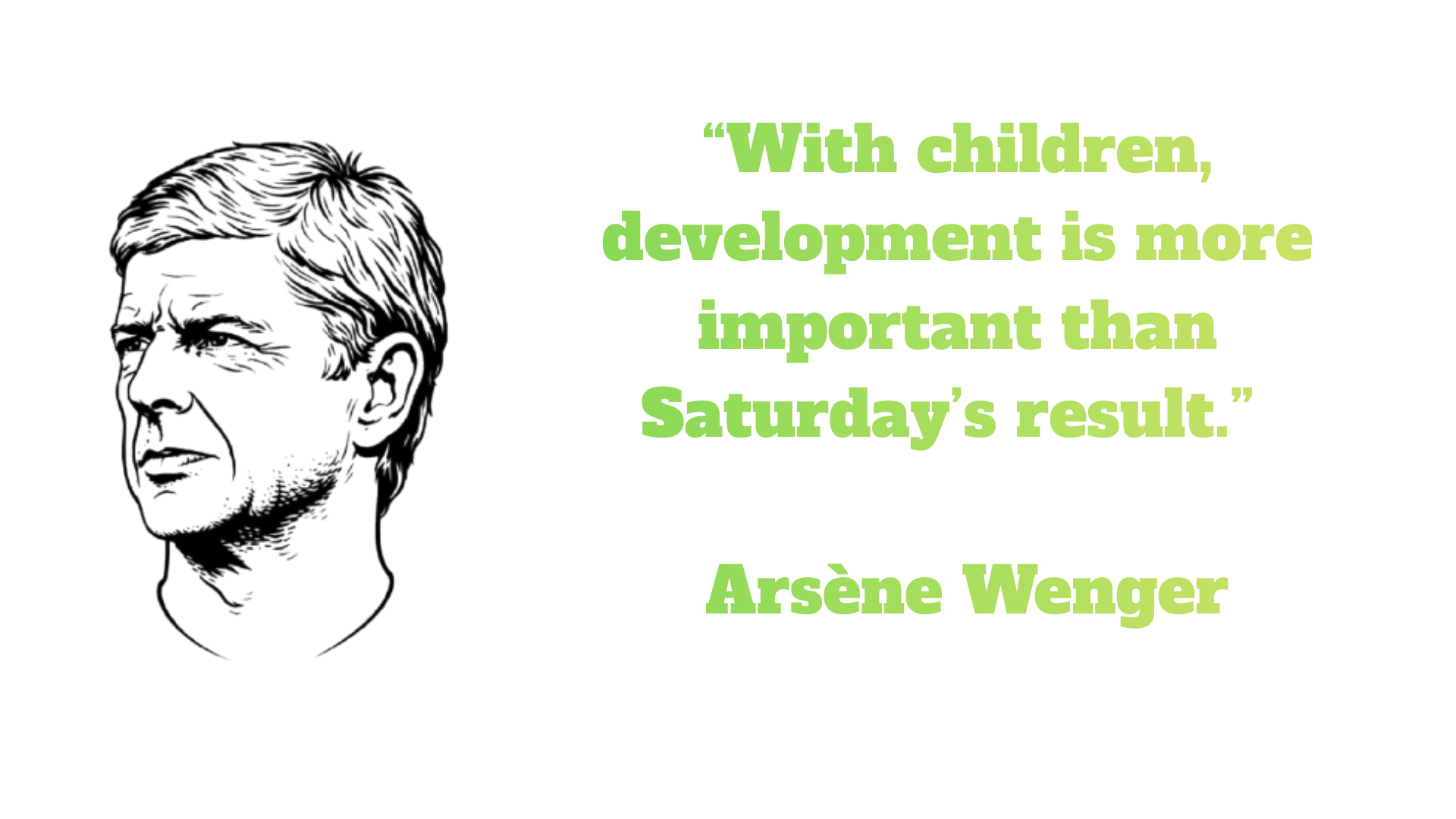
In youth football, a dangerous confusion often appears: measuring a child’s progress through the final score of the match. Arsène Wenger captures one of the healthiest development philosophies in a single sentence: immediate results should never be the priority when working with children . A good result on a Saturday does not guarantee long-term development. Children can win matches through simple solutions, fear of making mistakes,...
Read more
Categories
Customer Support Array
contact@enjoycoach.eu